
Have an emergency? Call us now on 07732 234231. Available 24/7 with a 30 minute response time.

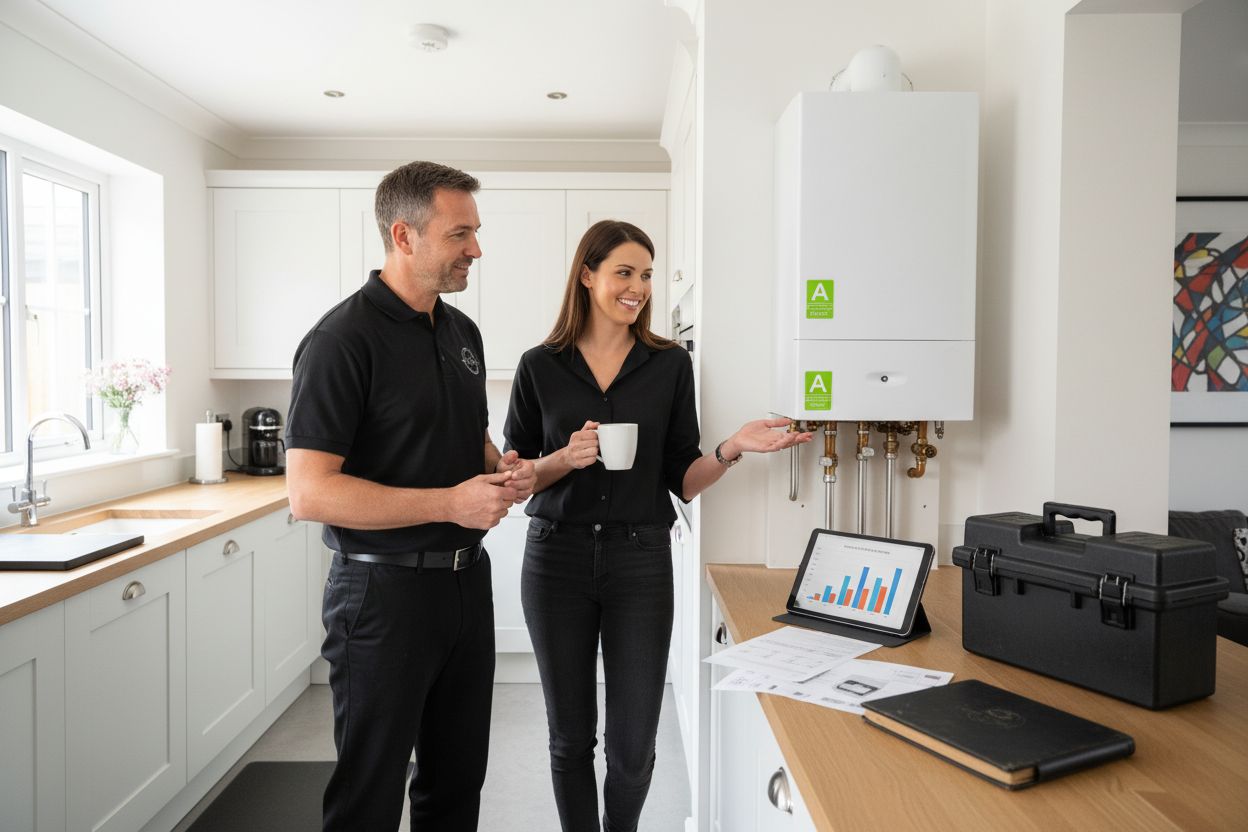
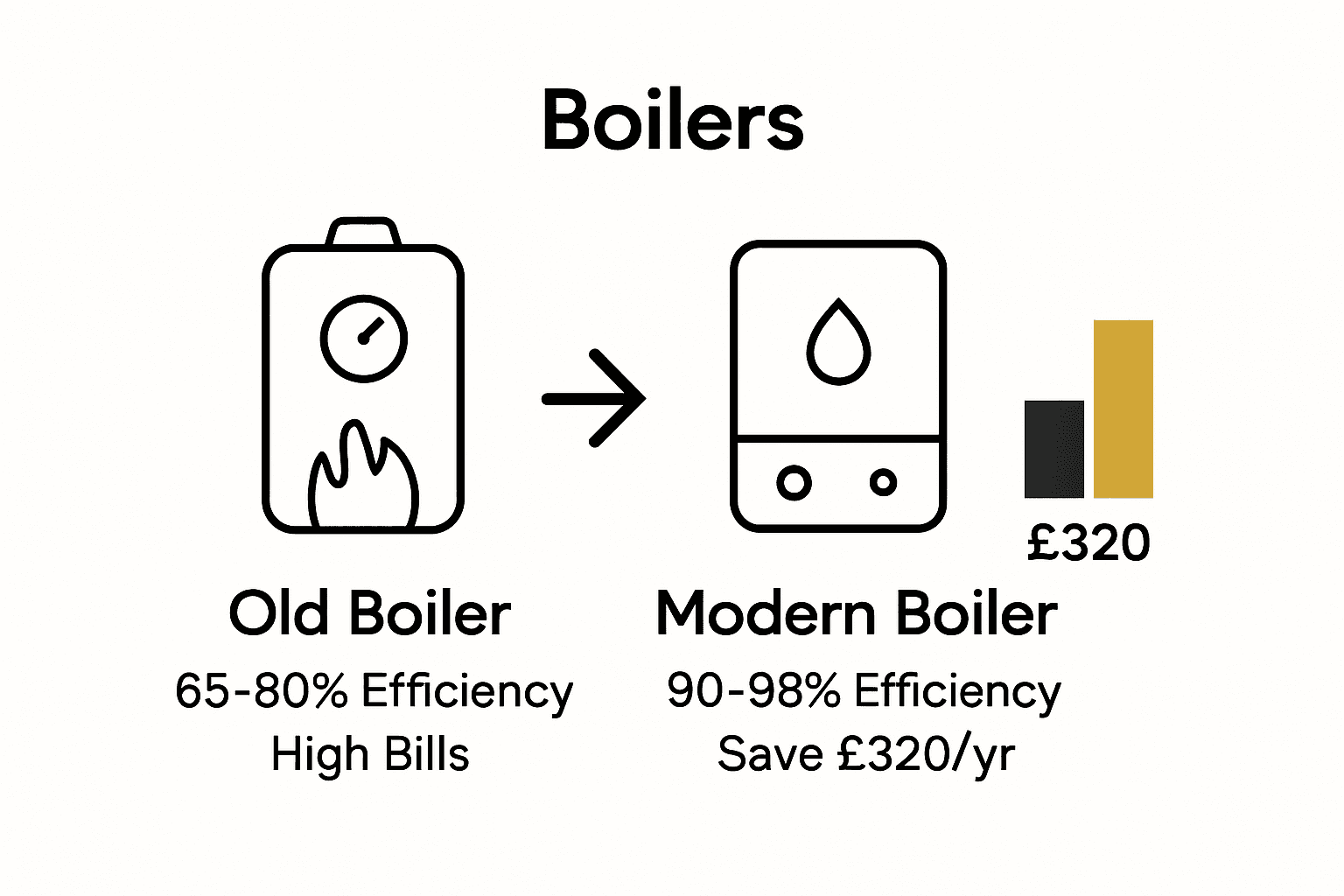
Did you know that upgrading an old boiler can cut heating costs by around £320 each year in a typical UK home? With energy prices rising and environmental rules tightening, choosing the right boiler upgrade matters more than ever. Understanding how modern systems deliver greater efficiency, comfort, and reliability can help you save money, improve daily living, and make your property future-ready.
| Point | Details |
|---|---|
| Importance of Boiler Upgrading | Upgrading to a modern, high-efficiency boiler can significantly enhance heating performance, reduce energy bills, and ensure long-term reliability. |
| Energy Efficiency Savings | Transitioning to an A-rated condensing boiler can save approximately £320 annually and lower carbon emissions by up to 1,000 kg CO₂ per year. |
| Regulatory Compliance | Boiler replacements must adhere to UK regulations, necessitating installations by qualified engineers and compliance with energy performance standards. |
| Broader Environmental Impact | Upgrading not only increases property value but also contributes to sustainable heating solutions, supporting national carbon reduction goals. |
Boiler upgrading represents a critical home improvement strategy that can dramatically enhance your heating system’s performance, efficiency, and long-term reliability. Boiler upgrading involves replacing an older, less efficient heating unit with a modern, high-performance model that delivers superior energy consumption and heating capabilities.
According to the Centre for Sustainable Energy, replacing a boiler more than 10 years old with a high-efficiency A-rated condensing model can save approximately £320 annually on heating bills in a typical semi-detached home. Explore our boiler selection guide for understanding which models might best suit your specific requirements. These modern condensing boilers are engineered to recapture heat from exhaust gases, making them substantially more efficient compared to traditional non-condensing models.
Homebuilding & Renovating highlights several compelling reasons for considering a boiler upgrade. Older boilers gradually become less reliable, leading to:
Upgrading your boiler isn’t just about immediate comfort – it’s a strategic investment in your property’s future efficiency and sustainability. By proactively addressing your heating system’s performance, you’ll not only reduce energy consumption but also potentially increase your property’s value and reduce your carbon footprint.
UK homes feature several distinct types of older boiler systems that have been common over the past decades, each with unique characteristics and efficiency levels. Regular boilers represent one of the most traditional heating configurations, typically involving a separate hot water cylinder for storing heated water and requiring more complex installation compared to modern systems.
According to the Centre for Sustainable Energy, older heating systems predominantly include non-condensing boilers that simply expel hot flue gases without recovering heat, making them significantly less efficient than contemporary condensing or combi systems. Learn more about modern boiler installations to understand the technological advancements in heating technology.
Homebuilding & Renovating highlights three primary categories of older boiler types prevalent in UK homes:
These older boiler systems share common limitations: reduced energy efficiency, higher operational costs, increased likelihood of mechanical failures, and challenges in sourcing replacement components. Understanding the specific type of boiler in your home is crucial for determining the most appropriate upgrade strategy and potential energy savings.
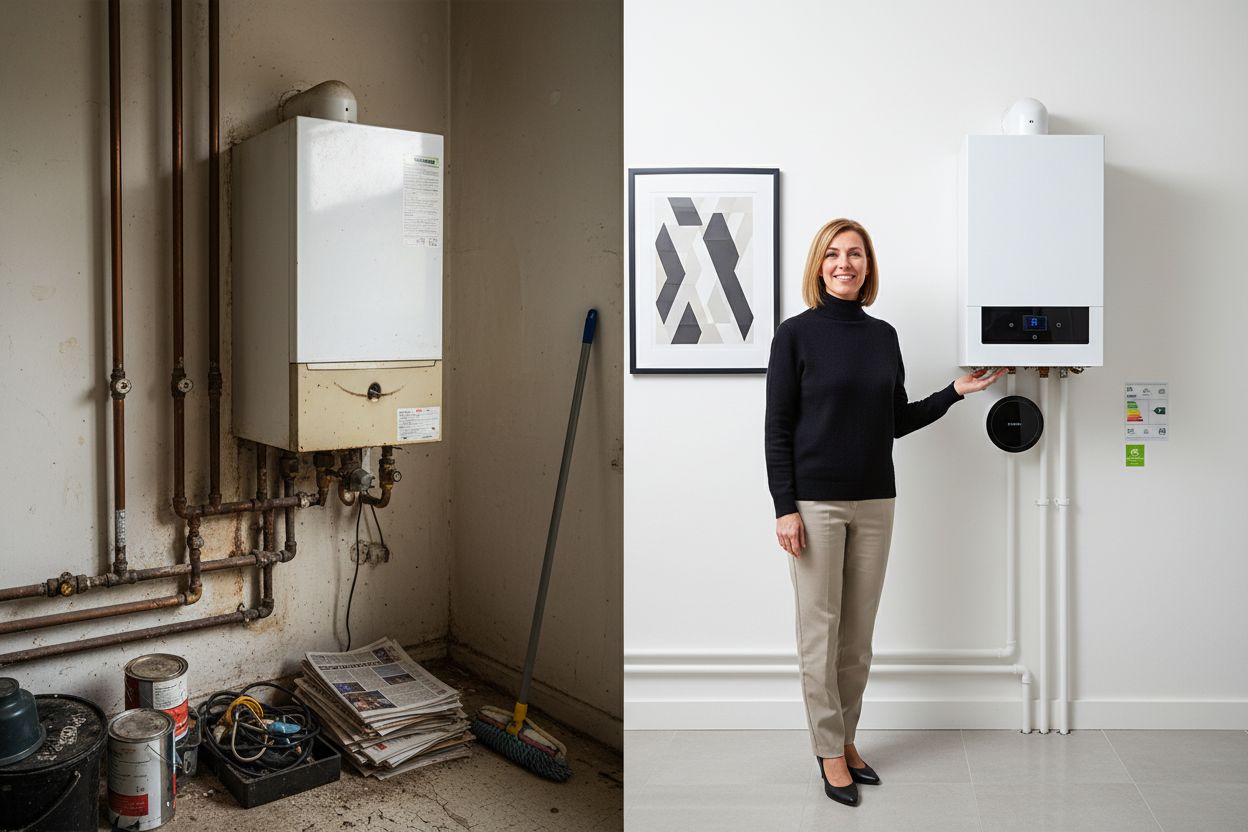
Here’s a comparison of common old and modern boiler types in UK homes:
| Boiler Type | Era Commonly Installed | Typical Efficiency | Key Limitations |
|---|---|---|---|
| Regular Boiler | Pre-2000s | 65-75% | Bulky system Higher heat loss Slow hot water |
| Non-condensing Gas | Pre-2005 | 70-80% | Wasted flue heat Higher bills Often large |
| Oil Boiler | Pre-2010 rural homes | 70-83% | Fuel storage needed Regular servicing Higher emissions |
| Electric Boiler | 1980s–present | 99% (but higher running costs) | Expensive electricity Limited for large homes |
| Modern Condensing (A-rated) | Post-2005 | 90–98% | Needs good maintenance More complex controls |
Boiler replacement offers homeowners a comprehensive solution to multiple heating challenges, transforming your home’s energy efficiency and comfort. Efficiency upgrades go far beyond simply replacing an old appliance – they represent a strategic investment in your property’s long-term performance and sustainability.
According to Elements Heating Installations, modern condensing gas boilers can reach up to 98% efficiency, delivering significant advantages. Explore our electric boiler options to understand alternative heating technologies. These advanced systems can generate substantial annual savings, with potential reductions of around £229 for a typical semi-detached home, while simultaneously lowering carbon emissions by up to 1,000 kg of CO₂ per year.
The key benefits of boiler replacement include:
As highlighted by UK heating experts, upgrading your boiler isn’t just about immediate comfort – it’s a forward-thinking decision that delivers financial savings, improved home performance, and contributes to broader environmental sustainability goals. The combination of lower running costs, reduced breakdown risks, and potential government incentives makes boiler replacement an increasingly attractive option for homeowners seeking to modernise their heating systems.
Upgrading your boiler represents a powerful strategy for achieving substantial energy efficiency improvements and meaningful environmental benefits. Energy performance goes beyond simple equipment replacement – it’s a comprehensive approach to reducing household carbon footprint and optimising heating system functionality.
According to the Centre for Sustainable Energy, upgrading from a G-rated to an A-rated condensing boiler can generate remarkable savings of approximately £320 annually in a typical home. Learn about our boiler installation process to understand how these upgrades can transform your home’s energy consumption. Building regulations now mandate that any boiler replacement must be an A-rated condensing model, ensuring improved energy performance across residential properties.
Elements Heating Installations provides additional insights into the broader impact of modern boiler technologies:
Beyond immediate financial savings, boiler upgrades represent a critical contribution to environmental sustainability. By investing in high-efficiency heating systems, homeowners can simultaneously reduce their carbon footprint, lower energy bills, and future-proof their properties against increasingly stringent environmental regulations. The combination of technological innovation and conscious energy management makes modern boiler replacement a win-win solution for both household economics and global environmental objectives.
Navigating the complex landscape of UK boiler regulations requires a comprehensive understanding of current legal requirements and compliance standards. Boiler installation is not simply a matter of replacing an old unit, but involves adhering to stringent national guidelines designed to ensure safety, efficiency, and environmental responsibility.
According to the Centre for Sustainable Energy, UK building regulations mandate specific requirements for boiler replacements. Explore our essential boiler maintenance checklist to understand the critical steps in maintaining regulatory compliance. Key regulatory requirements include:
Homebuilding & Renovating highlights the government’s proactive approach to supporting sustainable heating through the Boiler Upgrade Scheme. This initiative offers financial incentives to encourage homeowners to transition to more environmentally friendly heating solutions:
These regulations and incentive schemes reflect the UK’s commitment to reducing carbon emissions and promoting energy-efficient heating technologies. Homeowners must stay informed about these requirements to ensure legal compliance, maximize potential financial benefits, and contribute to broader environmental sustainability goals.
The landscape of home heating technologies has dramatically evolved, offering homeowners multiple options beyond traditional boiler systems. Modern heating solutions now encompass a range of technologies designed to improve energy efficiency, reduce carbon emissions, and provide more flexible home comfort.
According to Homebuilding & Renovating, the Boiler Upgrade Scheme has significantly accelerated the comparison between traditional boilers and low-carbon alternatives. Explore our comprehensive heating solutions guide to understand the nuanced differences between these systems. The key alternative heating technologies include:
Which? provides critical insights into the operational differences between these systems. Heat pumps, for instance, function most effectively in homes with large heat emitters and can run at significantly lower temperatures compared to traditional gas boilers. This means homeowners must carefully assess their property’s thermal characteristics, insulation levels, and heating requirements before selecting an alternative system.
Choosing between modern boilers and alternative systems isn’t just about immediate comfort – it’s a strategic decision impacting long-term energy costs, environmental sustainability, and home value. Each technology offers unique advantages, and the optimal solution depends on individual property characteristics, budget constraints, and personal environmental goals. By understanding these nuanced differences, homeowners can make informed decisions that balance immediate heating needs with future-focused energy efficiency.
Is your old boiler costing you more each month, leaving you worried about unexpected breakdowns and rising energy bills? The pain of an unreliable heating system is all too familiar to homeowners in Portsmouth, Waterlooville, and across Hampshire. This complete guide has shown how upgrading from inefficient boilers to modern solutions improves efficiency, reduces maintenance stress, and protects against the risk of compliance issues. At Skan Heating, we understand that every property is unique. Our certified engineers have over 18 years of experience transforming outdated systems into reliable comfort through professional installation and personalised advice. For guidance on choosing the right system, visit our boiler selection guide or discover the ease of our boiler installation process.
Ready to upgrade your home comfort and lower your bills? Do not let another winter pass with an old, expensive boiler. Whether you want improved efficiency, peace of mind, or to qualify for government incentives, Skan Heating is your local, trusted partner. Book a home consultation or request an urgent quote at https://skanheating.co.uk and secure a warmer, safer home today.
Upgrading an old boiler can lead to significant benefits including reduced energy bills, lower maintenance costs, enhanced comfort, and a smaller carbon footprint. Modern condensing boilers can achieve efficiencies of up to 98%, resulting in substantial savings and improved home performance.
Signs that your boiler may need replacing include rising energy bills, frequent mechanical failures, difficulty sourcing replacement parts, and inconsistent heating. If your boiler is over 10 years old, it may also be less efficient and may not comply with emerging environmental regulations.
Common types of old boilers in homes include regular boilers, non-condensing gas boilers, oil boilers, and electric boilers. Each type has unique efficiency levels and limitations, with older non-condensing models generally being less efficient compared to modern condensing systems.
When upgrading your boiler, it’s important to comply with UK building regulations that require installations to be performed by qualified engineers. Additionally, all replacement boilers must be A-rated condensing models and necessary certifications must be obtained for gas or oil installations.


