
Have an emergency? Call us now on 07732 234231. Available 24/7 with a 30 minute response time.

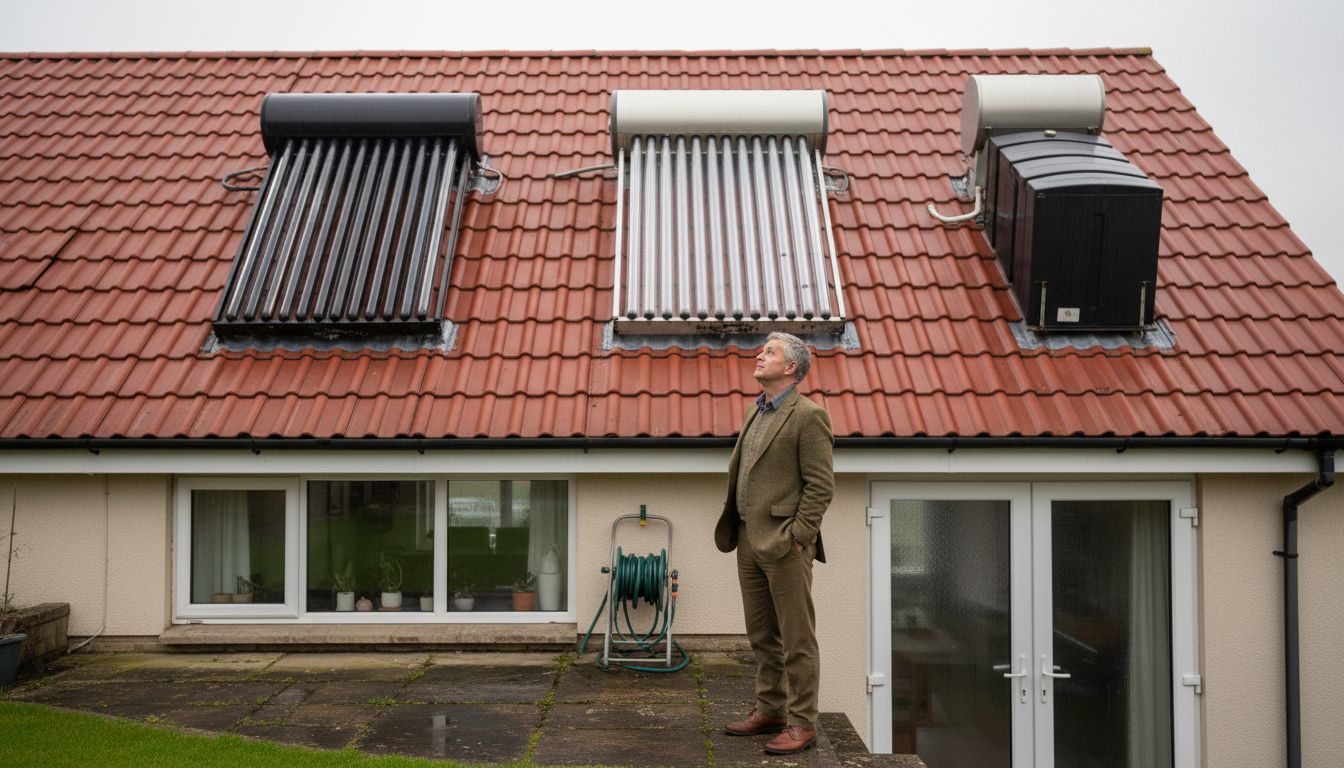
More than one million British homes have already adopted solar water heating, demonstrating a strong move toward cleaner energy. As energy bills continue to rise, British homeowners are searching for cost effective and reliable solutions to heat their water year round. By understanding the unique benefits of each solar water heating system, you can choose an option that delivers real savings, efficiency, and resilience in the unpredictable British climate.
| Key Message | Explanation |
|---|---|
| 1. Flat Plate Collectors are Reliable and Simple | These systems convert sunlight into hot water effectively, suitable for British homeowners with lower maintenance needs. |
| 2. Evacuated Tube Collectors Offer High Efficiency | These advanced systems outperform flat plate collectors, especially in challenging climates, providing consistent hot water generation. |
| 3. Thermosiphon Systems are Energy Efficient | They use natural principles for water circulation, requiring no electricity and minimal maintenance while ensuring reliable hot water. |
| 4. Indirect Systems Provide Frost Protection | These systems prevent freezing by circulating a heat transfer fluid, making them ideal for areas with significant temperature fluctuations. |
| 5. Drainback Systems Regulate Temperature Effectively | Automatically draining fluid prevents overheating and freezing, ensuring system longevity and reliable performance throughout the year. |
Flat plate collector solar water heaters represent an excellent entry point for British homeowners looking to harness solar energy efficiently. These systems use straightforward technology to transform sunlight into hot water for your household, making them a practical renewable energy solution.
The core design of flat plate collectors involves a dark absorber plate housed within an insulated box, typically covered with a transparent glass or plastic cover. When sunlight hits this plate, it heats up and transfers thermal energy to a fluid circulating through pipes attached to the absorber. Research from Ulster University highlights the potential of these systems to create high performance collectors with innovative design approaches.
How Flat Plate Collectors Work:
These systems work particularly well in the British climate, offering reliable hot water generation even during partially sunny days. Their robust construction means they can withstand variable weather conditions, providing a dependable renewable energy solution for residential properties. Performance studies demonstrate their effectiveness in converting solar energy into usable heat.
Key Benefits:
Homeowners can expect a flat plate collector system to provide approximately 50 to 70 percent of their annual hot water needs, depending on system size and local solar exposure. While initial installation costs might seem significant, the long term energy savings make these systems an intelligent investment for sustainable home heating.
Evacuated tube collectors represent the pinnacle of solar water heating technology for British households seeking maximum thermal performance. These sophisticated systems use an ingenious design that dramatically improves solar energy conversion compared to traditional flat plate collectors.
Research from the University of Bath investigated the thermal performance of evacuated tube systems, revealing their exceptional capability to generate hot water even in challenging maritime climates. Unlike conventional solar collectors, evacuated tubes feature a unique construction with each tube containing an absorber plate enclosed within a vacuum sealed glass tube.
How Evacuated Tube Collectors Function:
The vacuum between the inner and outer glass tubes creates an extraordinary thermal barrier, significantly reducing heat dissipation. This design means evacuated tube collectors can generate hot water more efficiently, even during cooler or partially overcast British weather conditions.
Performance Advantages:
Advanced studies using phase change fluids have demonstrated enhanced thermal performance in these collectors, suggesting they represent a cutting edge solution for homeowners seeking sustainable hot water solutions. By investing in evacuated tube technology, you can expect improved energy savings and reduced carbon footprint compared to traditional water heating methods.
Thermosiphon solar water heating systems represent an elegant and energy efficient solution for British homeowners seeking a low maintenance renewable hot water technology. These passive systems leverage natural physics principles to circulate water without requiring additional pumps or external power sources.
Research from the University of Bath investigated the intricate fluid dynamics of thermosyphon systems, revealing the complex yet ingenious mechanism behind their operation. The fundamental principle relies on thermal stratification where heated water naturally rises through the system due to differences in fluid density.
How Thermosiphon Systems Work:
The system design ensures that solar collectors capture sunlight and transfer thermal energy to water, which then automatically circulates through the system without electrical intervention. This makes thermosiphon systems particularly attractive for remote locations or households seeking to minimise additional energy consumption.
Key Performance Characteristics:
Advanced research indicates potential performance improvements through strategic design modifications, such as incorporating reflective concentrators to enhance solar radiation capture. By understanding these passive solar heating principles, homeowners can appreciate the sophisticated yet straightforward approach these systems employ for sustainable water heating.
Direct circulation solar water heating systems offer a straightforward approach to generating hot water by directly pumping potable water through solar collectors. These systems excel in regions with consistent temperatures and minimal risk of freezing.
Comprehensive research into solar water heating systems highlights the nuanced design considerations for direct circulation technologies, particularly their performance characteristics in temperate environments like the United Kingdom.
How Direct Circulation Systems Function:
The primary advantage of these systems lies in their ability to transfer solar energy directly to household water without intermediate heat exchangers. This approach maximises thermal efficiency and reduces energy losses associated with multiple fluid transfers.
System Advantages:
Field trials across the United Kingdom have demonstrated the practical viability of direct circulation solar water heating technologies, confirming their potential as a reliable renewable energy solution for domestic hot water generation. Homeowners can expect consistent performance during milder seasons, with potential supplementary heating required during extended periods of low solar radiation.
Indirect or closed-loop solar water heating systems represent the most resilient solution for British households contending with unpredictable winter temperatures. These sophisticated systems protect against freezing by circulating a specialised heat transfer fluid through solar collectors, ensuring consistent performance regardless of external weather conditions.
Research exploring solar water heating technologies highlights the critical role of closed-loop systems in managing temperature variations, particularly in regions experiencing significant temperature fluctuations.
How Indirect Systems Prevent Freezing:
The ingenious design involves a dedicated heat exchanger that transfers thermal energy from the heated transfer fluid to your household water supply. This mechanism ensures that your solar water heating system remains operational even during challenging winter months.
System Advantages:
Field trials across the United Kingdom have comprehensively evaluated the performance of these closed-loop solar water heating technologies, confirming their reliability and effectiveness in maintaining hot water generation throughout the year. Homeowners can invest with confidence, knowing their system will perform consistently across seasonal changes.
Drainback solar water heating systems represent a brilliantly engineered solution for British households seeking robust protection against temperature extremes. These intelligent systems automatically drain fluid from solar collectors when not in use, providing a sophisticated mechanism to prevent both overheating during peak summer and freezing during winter months.
Comprehensive research into solar water heating technologies highlights the intricate design considerations of drainback systems, emphasising their unique approach to thermal management.
How Drainback Systems Function:
The system operates by using gravity as a natural mechanism to protect solar collectors. When solar radiation is insufficient or temperatures drop, the fluid automatically drains back into a dedicated reservoir, preventing potential damage from freezing or excessive heat buildup.
System Advantages:
Field trials across the United Kingdom have demonstrated the reliability of drainback solar water heating technologies, confirming their potential as a robust renewable energy solution. Homeowners can expect consistent performance with significantly reduced risk of system failure due to temperature fluctuations.
This table summarises various solar water heating systems discussed in the article, detailing their mechanisms, benefits, and ideal conditions for use.
| System Type | Mechanism | Benefits |
|---|---|---|
| Flat Plate Collectors | Absorber plate heats fluid, minimal heat loss | Simple design, low maintenance |
| Evacuated Tube Collectors | Vacuum tubes with absorber plate, minimised heat loss | High efficiency, excellent heat retention |
| Thermosiphon Systems | Natural convection circulates water | Zero electricity, cost-effective |
| Direct Circulation Systems | Water pumped through collectors directly | Lower costs, effective in mild climates |
| Indirect Systems | Heat transfer fluid with antifreeze, protected from freezing | Frost protection, consistent performance |
| Drainback Systems | Fluid drains back when not in use, prevents overheating/freezing | Temperature regulation, enhanced longevity |
Choosing the right type of solar water heater can be confusing when faced with options like flat plate collectors, evacuated tube systems, or drainback designs. This article highlights common challenges such as frost protection, energy efficiency, and maintenance demands that UK homeowners must address to benefit fully from renewable hot water technology. Whether you want a passive thermosiphon system or a sophisticated closed-loop installation, understanding these key factors empowers you to make smarter decisions about sustainable heating.
At SKA Heating, we combine 18 years of trusted plumbing and heating expertise with personalised solar thermal system installations designed specifically for homes in Portsmouth, Waterlooville, and wider Hampshire. Our certified technicians ensure your system delivers maximum efficiency while protecting against freezing and overheating common in UK climates. From initial advice on advanced evacuated tube collectors to ongoing maintenance and emergency support, we guide you every step of the way.

Don’t let uncertainty delay your transition to clean hot water. Explore how our bespoke solar hot water solutions can reduce your energy bills and carbon footprint today at SKA Heating. Book a consultation to secure expert service with the peace of mind only over 18 years of local experience can provide.
Solar water heaters mainly include Flat Plate Collectors, Evacuated Tube Collectors, Thermosiphon Systems, Direct Circulation Systems, Indirect or Closed-Loop Systems, and Drainback Systems. Each type has unique advantages suited for different household needs. Research the specifics of each system to determine which aligns best with your requirements.
A flat plate collector works by absorbing sunlight on a dark absorber plate housed in an insulated box, which then heats a fluid circulating through pipes. To install, ensure you have adequate roof space oriented towards the sun to maximise exposure and efficiency.
Evacuated tube collectors can be up to 30 percent more efficient than flat plate collectors, especially in cooler temperatures. Evaluate your local climate when deciding which system to install for optimal hot water generation.
Thermosiphon systems rely on natural convection, where heated water rises through the system while cooler water descends. Ensure your solar collector is positioned below your hot water storage tank to facilitate this process effectively.
Indirect or closed-loop systems utilise a special heat transfer fluid that remains separate from the potable water, preventing any freezing damage during colder months. Consider installing one if your area experiences significant winter temperature drops.
Drainback systems automatically drain the fluid from the collectors when temperatures are too high, protecting the system from overheating. Install a reservoir for the draining mechanism to ensure a reliable operation during varying weather conditions.


