
Have an emergency? Call us now on 07732 234231. Available 24/7 with a 30 minute response time.

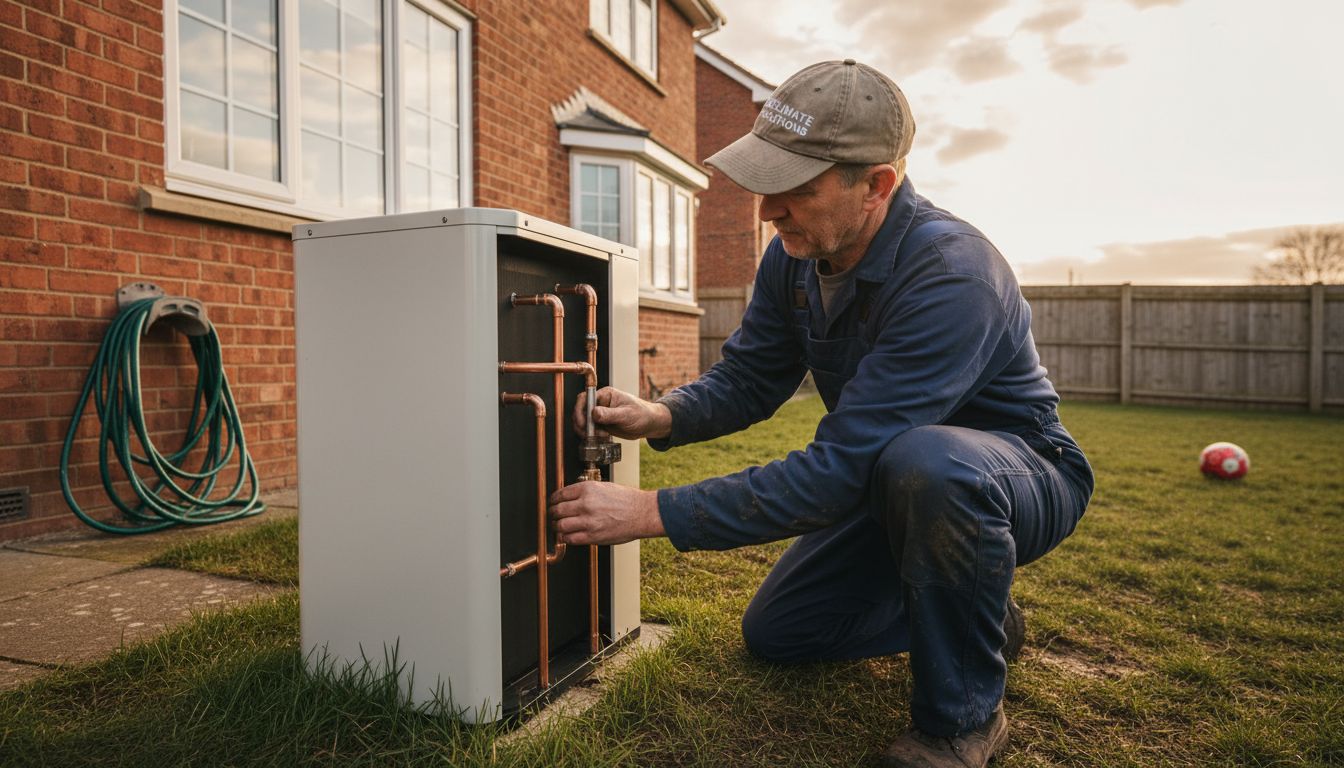
Over 80 percent of British homes still rely on outdated heating systems, driving up both energy costs and carbon emissions. With rising concerns about efficiency and sustainability, British homeowners are looking for smarter ways to keep their properties warm. Exploring the newest heat pump technologies reveals practical, environmentally friendly options that not only lower bills but also significantly reduce your household’s environmental impact.
| Takeaway | Explanation |
|---|---|
| 1. ASHPs are energy-efficient | Air Source Heat Pumps capture ambient heat, providing efficient heating even in low outdoor temperatures, significantly reducing energy consumption. |
| 2. GSHPs offer long-term durability | Ground Source Heat Pumps have buried pipes that can last over 50 years, ensuring reliable heating with minimal maintenance requirements. |
| 3. WSHPs leverage local water bodies | Water Source Heat Pumps utilise nearby rivers or lakes for thermal energy, offering consistent performance and lower energy bills year-round. |
| 4. Hybrid systems balance efficiency and reliability | Hybrid Heat Pumps intelligently switch between gas and electric sources, optimising energy use based on current conditions for effective heating. |
| 5. Proper insulation enhances performance | Insulating your home effectively is crucial for heat pump efficiency; it allows systems to operate at peak effectiveness and reduces overall costs. |
Air Source Heat Pumps (ASHPs) represent a cutting-edge heating solution that extracts warmth from outside air and transforms it into comfortable indoor heating. These innovative systems offer homeowners an energy-efficient alternative to traditional heating methods, capable of providing warmth even when outdoor temperatures plummet.
Unlike conventional heating systems, ASHPs work by capturing heat from the ambient air and transferring it indoors using a refrigeration cycle. This clever mechanism allows them to generate heat at much higher efficiency levels compared to electric heaters or gas boilers. The system essentially acts like a reverse air conditioner, absorbing heat from outside air and amplifying it to warm your living spaces.
The remarkable performance of ASHPs becomes particularly impressive when you understand their operational capabilities. Air source heat pump technology functions effectively across diverse temperature ranges, maintaining significant heating efficiency even when external temperatures drop below freezing. Modern ASHPs can extract heat from air as cold as -15 degrees Celsius, making them surprisingly versatile for British climate conditions.
Key Performance Characteristics:
• Can extract heat from outside air temperatures as low as -15°C
• Provide both heating and cooling functions
• Significantly reduce carbon emissions compared to fossil fuel systems
• Operate with electricity, potentially integrating with renewable energy sources
To maximise an Air Source Heat Pump’s performance, proper home insulation becomes crucial. Well-insulated properties allow these systems to operate at peak efficiency, minimising energy consumption and reducing overall heating costs. Homeowners should consider professional assessment of their property’s thermal characteristics to ensure optimal heat pump installation and performance.
While initial installation costs might seem substantial, the long-term energy savings and reduced carbon footprint make ASHPs an increasingly attractive heating solution for environmentally conscious households. Their ability to provide consistent, efficient heating while supporting sustainable energy goals positions them as a forward-thinking choice for modern British homes.
Ground Source Heat Pumps (GSHPs) represent an ingenious heating technology that harnesses the stable underground temperatures to provide efficient home heating. These remarkable systems tap into the consistent thermal energy stored beneath the Earth’s surface, offering a sustainable and reliable heating solution for modern British homes.
Heat pump technology finds its most sophisticated expression in Ground Source Heat Pumps, which extract thermal energy from the ground through an intricate network of underground pipes. The system circulates a special mixture of water and antifreeze through these buried pipes, absorbing the consistent ground temperature that remains relatively stable throughout the year.
How Ground Source Heat Pumps Function:
• Pipes are installed either horizontally in trenches or vertically in boreholes
• Underground temperatures remain constant between 10 to 12 degrees Celsius
• A heat exchanger transfers absorbed thermal energy into usable heating
• Compression technology amplifies the collected heat for home use
The underground components of Ground Source Heat Pumps are renowned for their exceptional longevity. Remarkably, the buried pipe infrastructure can function effectively for over 50 years, making them a robust long term investment for homeowners seeking sustainable heating solutions. This durability significantly reduces maintenance requirements and provides consistent performance across decades of use.
While installation costs might initially seem substantial, Ground Source Heat Pumps offer substantial long term benefits. They operate with remarkable efficiency, generating substantially more heat energy than the electrical input required to run the system. This efficiency translates into lower energy bills and reduced carbon emissions, positioning GSHPs as an environmentally responsible heating choice for conscientious homeowners.
Potential installers should consider factors such as available ground space, soil composition, and property heating requirements. Professional assessment becomes crucial to determine the most suitable ground loop configuration and ensure optimal system performance. With proper design and installation, Ground Source Heat Pumps can provide reliable, efficient heating that draws upon the Earth’s natural thermal reservoir.
Water Source Heat Pumps (WSHPs) represent an innovative heating technology that transforms nearby water bodies into efficient thermal energy sources for residential and commercial properties. These sophisticated systems capture heat from rivers, lakes, wells, or other aquatic environments, offering a sustainable alternative to traditional heating methods.
Heat pump technology reaches its most adaptable form with Water Source Heat Pumps, which extract thermal energy directly from water sources through an intricate network of submerged pipes. The system operates by circulating a specialised fluid through these underwater pipes, which absorb the consistent temperatures found in local water environments.
Key Operational Characteristics:
• Suitable for properties near water bodies
• Provide both heating and cooling functions
• Maintain consistent performance throughout the year
• Significantly reduce energy consumption compared to traditional systems
The remarkable efficiency of Water Source Heat Pumps stems from water’s superior heat transfer capabilities compared to air or ground environments. Water maintains a more stable temperature throughout seasonal changes, allowing WSHPs to operate with exceptional consistency. This stability translates into higher energy efficiency and more predictable heating performance for homeowners.
Installation considerations are crucial when implementing a Water Source Heat Pump. Potential systems require proximity to a suitable water source with sufficient volume and flow characteristics. Professional assessments help determine the most appropriate configuration, whether using a horizontal pipe network in a lake or vertical pipes in a deep well.
While initial installation costs might seem substantial, Water Source Heat Pumps offer significant long term benefits. They can reduce energy expenses by extracting renewable thermal energy from local water sources, providing an environmentally responsible heating solution that minimises carbon emissions and supports sustainable home heating strategies.
Hybrid Heat Pumps represent an ingenious solution for homeowners seeking to modernise their heating systems while maintaining flexibility and energy efficiency. These sophisticated systems seamlessly integrate traditional gas boilers with advanced heat pump technology, creating a dynamic heating approach that adapts to changing energy demands and environmental conditions.
Heat pump technology reaches its most adaptable form with hybrid systems, which intelligently switch between gas and electric power sources depending on which method is most efficient at any given moment. This intelligent design allows homeowners to reduce carbon emissions while preserving the reliability of established heating infrastructure.
Key Operational Features:
• Automatically select most efficient energy source
• Reduce overall carbon emissions
• Maintain heating performance across varied conditions
• Minimise energy consumption through smart switching
The core advantage of Hybrid Heat Pumps lies in their remarkable flexibility. During milder weather, the heat pump can operate independently, extracting thermal energy from the environment with remarkable efficiency. When temperatures plummet or energy demand peaks, the system smoothly transitions to gas power, ensuring consistent home comfort without compromising performance.
Installation of a Hybrid Heat Pump is particularly advantageous for properties with existing gas heating systems. Rather than requiring a complete system replacement, homeowners can upgrade their current infrastructure incrementally. This approach not only reduces upfront costs but also provides a gradual pathway towards more sustainable home heating solutions.
By combining the renewable energy potential of heat pumps with the established reliability of gas boilers, Hybrid Heat Pumps offer a pragmatic approach to reducing household carbon footprints. They represent a forward thinking solution for environmentally conscious homeowners seeking to balance technological innovation with practical energy management.
Exhaust Air Heat Pumps represent an innovative approach to home heating that transforms typically wasted indoor air into a valuable thermal energy resource. These sophisticated systems capture warm air typically expelled from buildings, extracting its residual heat and repurposing it for home heating and water warming.
Modern heat pump technology reaches a remarkable efficiency milestone with Exhaust Air Heat Pumps, which operate on a simple yet ingenious principle of heat recovery. By intercepting warm air that would ordinarily be vented outside, these systems capture thermal energy that would otherwise be lost, converting it into usable heating for your living spaces.
Key Operational Characteristics:
• Capture and recycle warmth from extracted indoor air
• Improve overall home energy efficiency
• Enhance indoor ventilation systems
• Reduce carbon emissions through heat recovery
• Minimise energy consumption
The mechanism of Exhaust Air Heat Pumps involves a carefully engineered process of heat extraction. As stale indoor air is drawn from rooms such as kitchens and bathrooms, the system passes this air through a heat exchanger. Here, the thermal energy is transferred to a refrigerant, which is then compressed to increase its temperature before being distributed throughout the home as useful heating.
Particularly effective in well insulated properties, these heat pumps offer dual benefits of thermal recycling and improved air quality. The continuous air exchange ensures fresh ventilation while simultaneously capturing and reusing heat that would traditionally be discarded. This approach not only reduces energy consumption but also contributes to maintaining a comfortable and healthy indoor environment.
Homeowners considering Exhaust Air Heat Pumps should prioritise comprehensive home insulation and airtightness. The more efficiently a home can retain heat, the greater the potential benefits of this innovative heating technology. By transforming what was once considered waste air into a valuable heating resource, these systems represent a forward thinking approach to sustainable home energy management.
Selecting the ideal heat pump for your home represents a significant decision that requires careful consideration of multiple factors. The perfect heat pump solution depends on understanding your property’s unique characteristics, energy requirements, and long term sustainability goals.
Heat pump installation steps begin with a comprehensive assessment of your property’s specific needs, considering elements such as building size, existing insulation quality, and outdoor space availability. Each heat pump type offers distinct advantages that make them more suitable for different property configurations.
Key Selection Criteria:
• Assess current home insulation levels
• Evaluate available outdoor space
• Consider property size and heating requirements
• Review existing heating infrastructure
• Analyse budget constraints
• Understand local climate conditions
Air Source Heat Pumps work exceptionally well for most residential properties, offering flexibility and relatively straightforward installation. They require minimal external space and can be mounted on an exterior wall. Ground Source Heat Pumps demand more extensive groundwork, necessitating sufficient land area for horizontal ground loops or deep vertical boreholes.
Property insulation becomes a critical factor in heat pump performance. Well insulated homes retain heat more efficiently, allowing heat pumps to operate at peak effectiveness and minimise energy consumption. Homeowners should prioritise improving wall, roof, and floor insulation before heat pump installation to maximise system efficiency.
Budget considerations extend beyond initial installation costs. While ground source systems typically have higher upfront expenses, they often provide superior long term energy savings. Air source alternatives offer a more accessible entry point for homeowners seeking to transition towards sustainable heating solutions. Professional consultation remains essential to navigate these complex decisions and identify the most appropriate heat pump technology for your specific requirements.
The table below summarises the key concepts and features of various heat pump technologies discussed in the article, highlighting their main benefits and considerations.
| Type of Heat Pump | Key Features | Benefits/Considerations |
|---|---|---|
| Air Source | Extracts heat from outside air even at -15°C; provides heating and cooling. | Reduces carbon emissions; efficient for British climate; requires good home insulation. |
| Ground Source | Utilises stable underground temperatures; uses horizontal or vertical pipes. | Long lifespan; efficient and sustainable; high initial costs; needs ground space. |
| Water Source | Captures heat from local water bodies; uses submerged pipes. | High efficiency; reduces energy consumption; requires proximity to water sources. |
| Hybrid | Combines gas boilers with heat pumps; smart switching technology. | Flexible energy use; retains existing gas infrastructure; reduces carbon footprint. |
| Exhaust Air | Recycles warm indoor air; captures and repurposes heat. | Enhances ventilation; reduces energy use; benefits from good insulation. |
| Choosing the Right Pump | Assess insulation, space, and climate needs; consider budget and infrastructure. | Professional consultation recommended; varies by property requirements. |
Choosing the right heat pump can feel overwhelming with the variety of options like Air Source, Ground Source, and Hybrid systems each offering unique benefits and challenges. If you are facing questions about which technology suits your property, insulation level, or budget, Skan Heating provides expert guidance to help you make the best decision. With over 18 years of local experience serving Portsmouth and Waterlooville, our certified technicians understand how to tailor solutions that maximise efficiency and comfort while minimising energy costs.

Take control of your home’s heating today by consulting with our team of heating professionals. Whether you want to install an efficient new heat pump, upgrade your existing system, or need reliable maintenance, we are ready to assist you 24/7. Don’t wait for higher bills or colder days to act. Visit Skan Heating’s website, explore practical insights on heat pump technology, and secure a solution that fits your needs and supports sustainable living now.
Air Source Heat Pumps, Ground Source Heat Pumps, Water Source Heat Pumps, Hybrid Heat Pumps, and Exhaust Air Heat Pumps are the key types available. Each offers unique benefits depending on your home’s characteristics and heating needs.
To select the ideal heat pump, assess your property’s insulation levels, outdoor space, and heating requirements. Consider engaging a professional for an in-depth evaluation to ensure you match the heat pump type with your specific needs.
The efficiency of a heat pump is influenced by your home’s insulation quality, the type of heat pump used, and the ambient temperature. Improving your property’s insulation and ensuring proper installation can significantly enhance the heat pump’s performance and efficiency.
Heat pumps can reduce energy costs significantly, often by 20% to 50% compared to traditional heating methods. By keeping your heat pump well maintained and optimally used, you can maximise savings over time.
While installation costs can vary, it’s essential to look beyond the initial prices and consider long-term savings. Evaluate potential energy savings alongside maintenance costs to gain a clearer picture of the financial implications over the lifespan of the heat pump.
Most heat pumps have a lifespan of 15 to 25 years, depending on maintenance and the type of system. Schedule regular maintenance checks to ensure optimal function and longevity.


