
Have an emergency? Call us now on 07732 234231. Available 24/7 with a 30 minute response time.

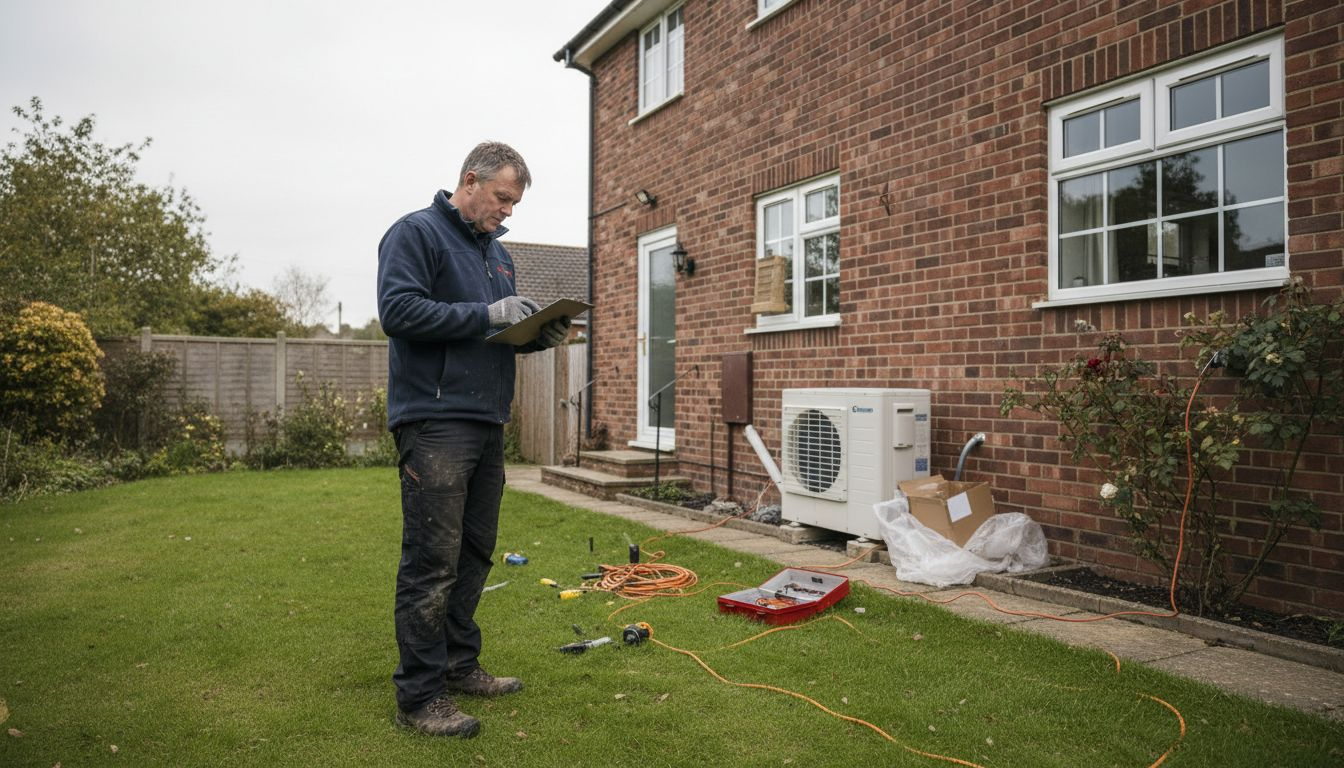
Over one million British homes now use heat pump technology for cleaner, more efficient heating. As government incentives and local guidelines continue to encourage homeowners across Hampshire and surrounding regions to consider greener alternatives, understanding how to prepare your property is more important than ever. This clear, step by step guide breaks down the essentials so you can assess, plan, and approach heat pump installation with confidence and ease.
| Key Insight | Explanation |
|---|---|
| 1. Assess property suitability | Evaluate insulation, layout, and energy efficiency of your home to determine heat pump compatibility. Use government tools for guidance. |
| 2. Ensure proper site preparation | Create a stable and accessible environment for installation, considering space for airflow and protection from noise and elements. |
| 3. Engage professional assistance | Involve certified heating engineers and electricians to ensure safe and efficient installation according to industry standards. |
| 4. Conduct thorough system testing | Verify the heat pump’s operation by testing pressures, refrigerant levels, and overall thermal efficiency post-installation. |
| 5. Document installation and performance | Maintain records of the installation process and testing results as valuable references for future maintenance and warranty claims. |
Before embarking on a heat pump installation, understanding your Hampshire home’s specific characteristics is crucial. The process begins with a comprehensive property assessment to determine whether a heat pump represents an appropriate heating solution. Government resources provide online tools to help homeowners evaluate their property’s compatibility, which can streamline your initial research.
Property evaluation involves examining several key factors including insulation quality, building age, existing heating infrastructure, and physical layout. Research from the Energy Saving Trust confirms that heat pumps can successfully integrate across diverse property types including flats, semi-detached homes, and older constructions. You will want to consider your property’s floor space, wall thickness, current energy efficiency rating, and potential heat loss areas. Ground source heat pumps require significant external space for ground loops, while air source heat pumps offer more flexibility with external wall mounting.
Typically, properties with good insulation, moderate heating requirements, and relatively consistent temperature maintenance prove most suitable for heat pump technology. Older properties might require additional insulation upgrades before installation to maximise system efficiency. Consulting with a professional heating engineer who understands local Hampshire building characteristics can provide personalised guidance tailored to your specific home.
Professional tip: Arrange a comprehensive home energy assessment before committing to a heat pump installation to understand your property’s unique thermal performance and potential retrofit requirements.
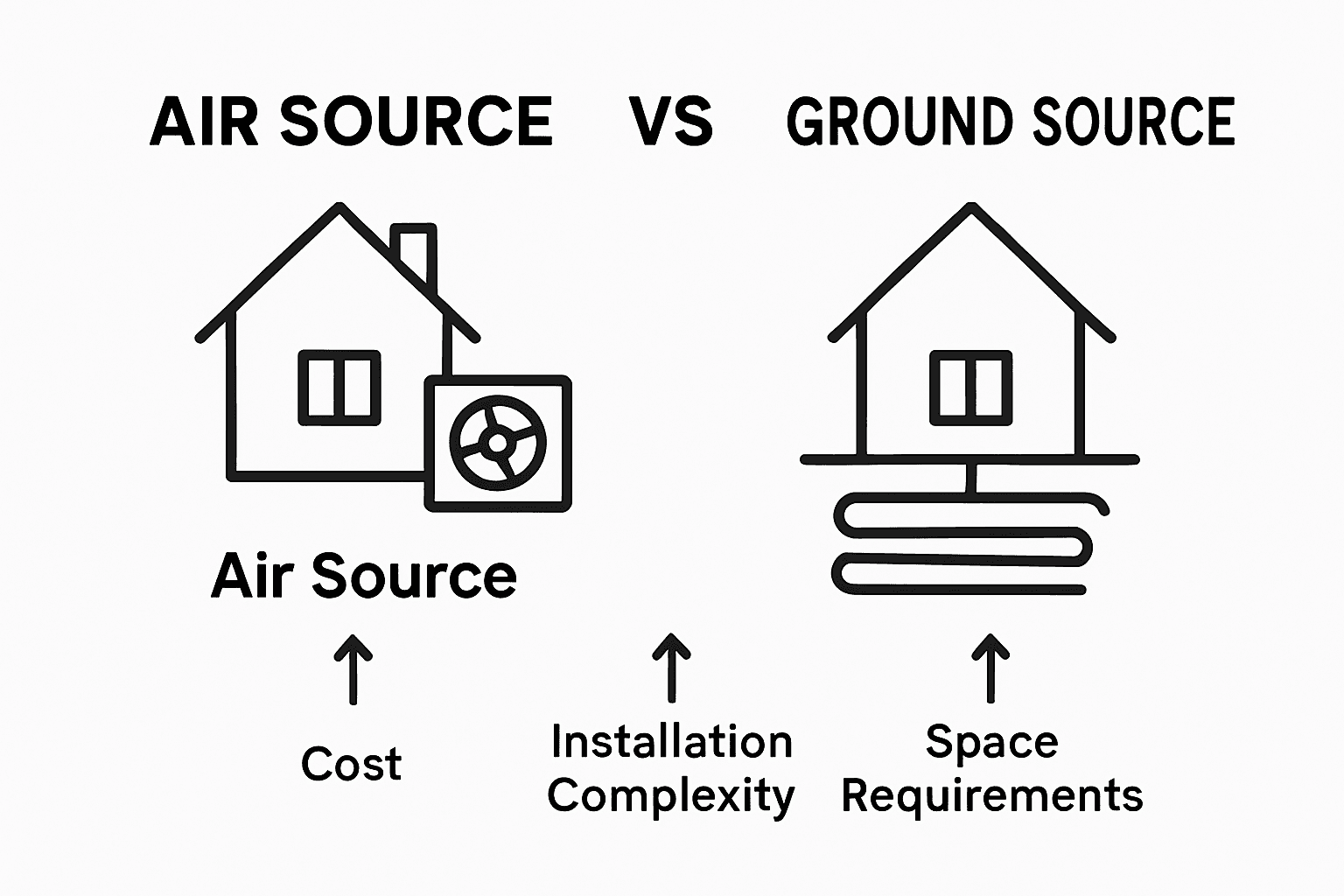
Here is a summary comparing air source and ground source heat pumps for Hampshire homes:
| Aspect | Air Source Heat Pump | Ground Source Heat Pump |
|---|---|---|
| Space Requirement | Small external wall or garden area | Large outside space for ground loops |
| Installation Complexity | Easier, less disruptive | More complex, involves ground excavation |
| Noise Level | Audible, but can be minimised | Usually very quiet once installed |
| Upfront Cost | Generally lower | Higher due to groundworks |
| Suitability | Most property types | Properties with ample land |
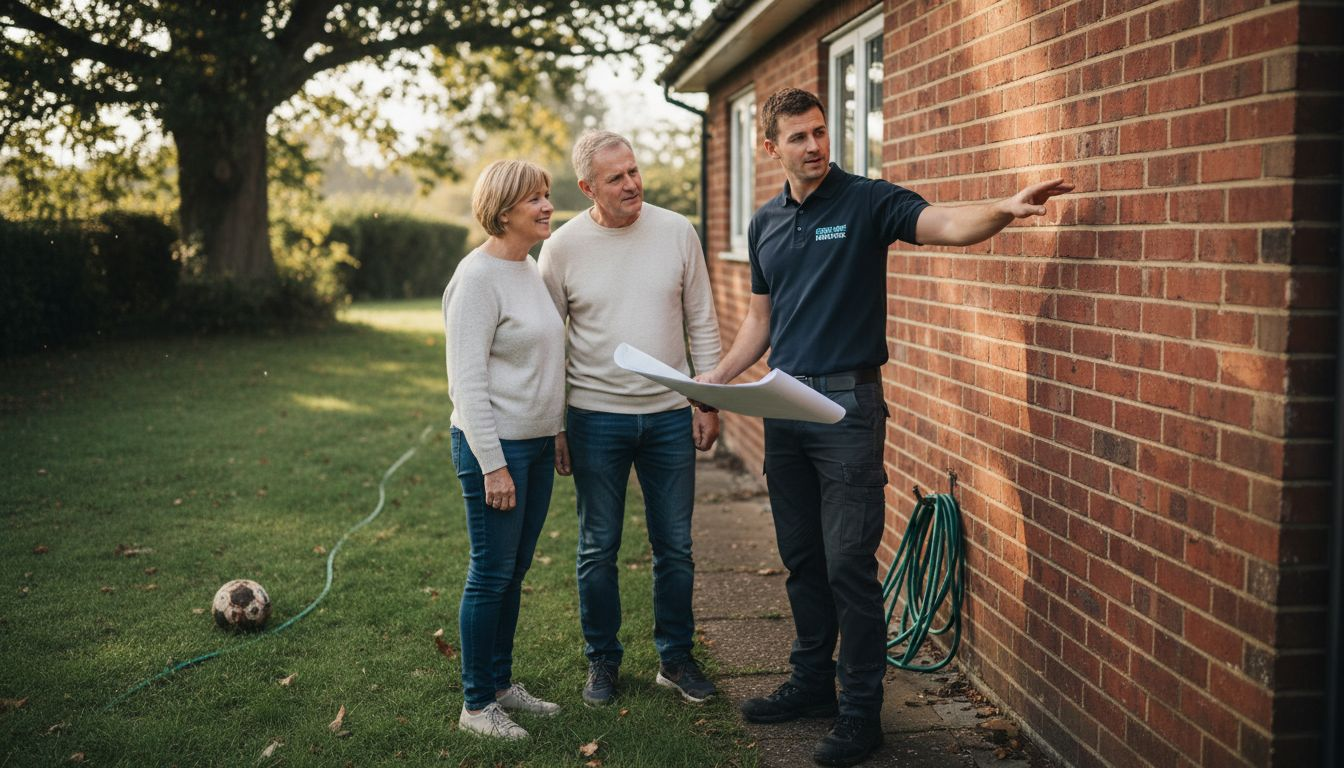
Preparing your Hampshire home for heat pump installation requires meticulous planning and strategic site preparation. This crucial stage sets the foundation for a successful and efficient heating system implementation. Professional recommendations emphasise creating a stable and accessible installation environment, which demands careful consideration of multiple technical factors.
The initial setup involves selecting an optimal location for your heat pump unit. For air source heat pumps, you will need a robust external wall with sufficient clearance for airflow and maintenance access. Ground must be firm, level, and capable of supporting the equipment weight. Your chosen site should minimise noise transmission to neighbouring properties while ensuring unobstructed air circulation. Electrical infrastructure assessment is paramount ensure your home’s current system can handle the power requirements of the new heat pump. This might involve consulting an electrician to verify circuit capacity and potentially upgrade your electrical panel if necessary.
During equipment arrangement, consider both functional performance and aesthetic integration. Positioning the heat pump away from windows and living spaces reduces potential noise disruption. Ensure the unit has adequate protection from direct wind exposure while maintaining manufacturer recommended spacing from walls and potential obstructions. Mounting brackets, vibration dampeners, and appropriate drainage provisions should be carefully installed to support long term system reliability.
Professional tip: Photograph your proposed installation site and consult your heating engineer to validate the location before commencing any permanent mounting or infrastructure modifications.
The key professionals and their roles during installation are outlined below:
| Professional | Responsibility | Reason for Involvement |
|---|---|---|
| Heating Engineer | System design and installation | Ensures optimal heat pump performance |
| Electrician | Electrical connection and upgrades | Guarantees safety and legal compliance |
| Building Assessor | Property and insulation evaluation | Identifies retrofit and efficiency needs |
Installing heat pump components represents a complex process requiring precision and technical expertise. Your Hampshire home will undergo a comprehensive transformation as both internal and external systems are integrated. Professional guidelines recommend carefully preparing your property for this intricate installation process, ensuring optimal system performance and long term reliability.
The external unit installation demands particular attention. Manufacturers specify exact requirements for placement, including maintaining appropriate clearance from walls and potential obstructions. Your chosen location should provide stable ground support, ideally over a gravel base to facilitate drainage and minimise vibration. The unit requires strategic orientation to maximise efficiency, typically facing away from prevailing wind directions and positioned to minimise potential noise disruption to neighbouring properties. Interior preparations are equally critical, involving potential modifications to existing heating infrastructure such as radiators or underfloor heating systems.
Interior component placement involves strategic positioning of the hot water cylinder, ensuring sufficient space and appropriate connections to your new heat pump system. Electrical and pipework connections must be completed by certified professionals, with meticulous attention to insulation, pipe routing, and system integration. Each component requires precise alignment to guarantee optimal thermal transfer and energy efficiency throughout your home.
Professional tip: Photograph and document every stage of the installation process, creating a comprehensive record that can assist with future maintenance and potential warranty claims.
Connecting the pipework and electrical systems represents a critical phase in heat pump installation that demands professional expertise and meticulous attention to safety protocols. Professional guidance emphasises the importance of thoroughly assessing your property’s existing electrical infrastructure to ensure compatibility with the new heat pump system.
The electrical connection process requires a comprehensive evaluation of your home’s current power capacity. Your existing electrical panel must be capable of supporting the heat pump’s power requirements, which might necessitate upgrading circuit breakers or installing dedicated electrical circuits. Certified electricians will carefully map out the electrical routing, ensuring all connections comply with current British electrical safety standards. Pipework installation involves precise measurements and strategic routing, with careful consideration of insulation quality to minimise heat loss and maximise system efficiency.
Professional installers will meticulously connect refrigerant lines, ensuring airtight seals and proper alignment between internal and external units. Each connection point requires precise alignment and expert technical skills to guarantee optimal system performance. Thermal insulation of pipework becomes crucial in preventing energy loss, with special attention paid to joints, bends, and potential exposure points that could compromise the system’s overall efficiency.
Professional tip: Request a comprehensive electrical and pipework system schematic from your installation team, which will prove invaluable for future maintenance and potential troubleshooting.
The final stage of heat pump installation involves rigorous testing and validation to ensure your new heating system operates at peak performance. Professional commissioning protocols emphasise comprehensive system diagnostics to confirm optimal functionality and verify that every component meets manufacturer specifications.
Testing begins with a systematic evaluation of system pressures, refrigerant levels, and electrical connections. Certified technicians will conduct detailed performance checks, measuring flow rates, temperature differentials, and overall thermal transfer efficiency. This process involves running the system through multiple operational cycles, monitoring both heating and hot water functions to ensure consistent performance across different load conditions. They will carefully assess airflow patterns, evaluate noise levels, and confirm that the heat pump achieves the desired temperature ranges with minimal energy consumption.
The verification process extends beyond initial performance metrics. Technicians will calibrate control systems, validate thermostat responsiveness, and ensure seamless integration with your home’s existing heating infrastructure. They will review system logs, check for any error codes, and make precise adjustments to optimise overall system efficiency. This meticulous approach guarantees that your heat pump delivers reliable, energy efficient heating tailored to your specific Hampshire home requirements.
Professional tip: Request a detailed performance report from your installation team, documenting all test results and system parameters for future reference and potential warranty claims.
Navigating the complexities of heat pump installation in your Hampshire property can feel overwhelming. From assessing your home’s suitability and preparing the site to connecting intricate pipework and ensuring safe electrical integration, every step demands expertise and precision. Whether you face challenges with space requirements, electrical upgrades, or ensuring optimal efficiency, recognising these pain points early helps you make informed decisions about your heating solutions.
At SKAN Heating, our team specialises in delivering reliable, professional heat pump installation and maintenance services across Portsmouth, Waterlooville, and the wider Hampshire area. With over 18 years of experience and certified technicians dedicated to seamless system integration, we ensure your heat pump not only fits perfectly within your home’s unique structure but also performs efficiently year-round. Do not let the technicalities hold you back from upgrading to sustainable heating — expert support is just a call away.

Ready to transform your home heating with confidence and expert care? Visit our homepage to explore our comprehensive heating services or contact us today for a personalised consultation. Start your heat pump journey now and enjoy warm, energy-efficient comfort tailored to your Hampshire home.
To assess your home’s suitability for a heat pump, evaluate factors such as insulation quality, building age, and existing heating infrastructure. Perform a comprehensive home energy assessment to determine the necessary upgrades for optimal efficiency.
Before installing a heat pump, prepare by selecting an optimal location for the unit that allows for sufficient airflow and maintenance access. Consult with professionals to ensure your property’s electrical system can support the new installation and verify the site’s stability and level ground.
The main steps include assessing property suitability, preparing the site, installing internal and external components, connecting pipework and electrical systems, and finally testing system operation. Document each phase to ensure all installations meet operational standards and troubleshooting requirements.
To ensure optimal efficiency, request a detailed performance report after installation that documents all test results. This report can help you understand system operation and identify any future maintenance needs to maintain efficiency over time.
If your heat pump is noisy, first ensure that it is positioned in an optimal location away from living spaces. Check for any obstructions that might affect airflow, and consider consulting a professional to assess installation quality or to recommend adjustments to minimise noise disruption.


