
Have an emergency? Call us now on 07732 234231. Available 24/7 with a 30 minute response time.

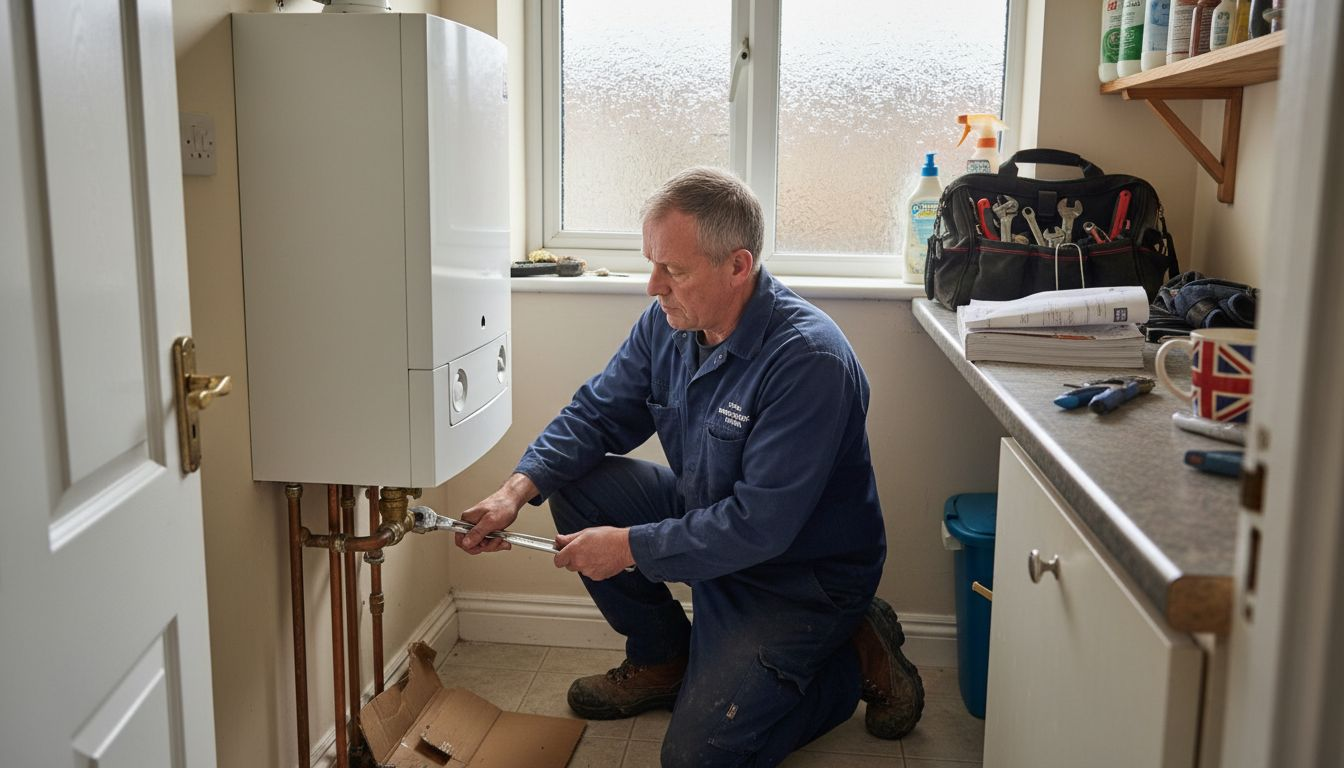
Over 20 million British homes rely on gas boilers for everyday heating and hot water. This cornerstone of modern comfort shapes how families across the United Kingdom manage their energy bills and indoor climate. Understanding what sets a gas boiler apart and how it functions helps British homeowners make smarter decisions around efficiency, safety, and the long-term value of their heating system.
| Point | Details |
|---|---|
| Understanding Boiler Types | Choose the right gas boiler type—Combi, System, or Regular—based on your property size and hot water needs for optimal efficiency. |
| Efficiency and Maintenance | Regular servicing is crucial for maintaining boiler performance, extending lifespan, and ensuring safety compliance. |
| Safety Regulations | Always hire Gas Safe registered engineers for installation and maintenance to prevent hazards and comply with legal standards. |
| Running Costs | Consider initial installation costs, efficiency ratings, and expected lifespan to make informed decisions about your heating system. |
A gas boiler is a fundamental heating system that converts natural gas into warmth for homes and commercial spaces. These ingenious devices combine efficiency and practicality, transforming gas combustion into usable heat through a sophisticated thermal transfer process.
At its core, a gas boiler operates by burning natural gas in a combustion chamber, generating intense heat that warms water circulating through a network of pipes and radiators. The system works seamlessly: cold water enters the boiler, gets heated by the gas-powered burner, and then distributes warmth throughout your property via central heating networks. This process ensures consistent temperature control and provides hot water for domestic use simultaneously.
Modern gas boilers are designed with remarkable energy efficiency, incorporating advanced technologies that minimise waste and maximise heat output. They typically feature intricate heat exchangers that capture and redistribute thermal energy, ensuring that minimal heat is lost during the conversion process. Different types of gas boilers exist – including combi, system, and conventional models – each tailored to specific household requirements and spatial configurations.
Pro Tip: Annual servicing: Schedule professional maintenance for your gas boiler every 12 months to ensure optimal performance, prevent unexpected breakdowns, and maintain your manufacturer’s warranty.
Gas boilers are not a one-size-fits-all solution. In fact, different boiler types offer unique advantages for various household configurations, making selecting the right model crucial for optimal home heating efficiency.
Three primary gas boiler types dominate the market: combi boilers, system boilers, and regular (conventional) boilers. Combi boilers represent the most compact and efficient option, heating water directly from the mains supply without requiring a separate hot water cylinder. They’re ideal for smaller properties with limited space and lower hot water demands. System boilers, by contrast, utilise a separate hot water cylinder, making them suitable for homes with multiple bathrooms or higher simultaneous water usage requirements. Regular boilers, the most traditional design, include both a hot water cylinder and a cold water storage tank, typically found in older properties with existing infrastructure.
Each boiler type presents distinct installation and operational characteristics. Combi boilers offer instant hot water and high energy efficiency, system boilers provide excellent water pressure and consistent hot water supply, while regular boilers remain compatible with older central heating systems. Your property’s size, existing plumbing configuration, and hot water requirements will ultimately determine the most appropriate boiler type.
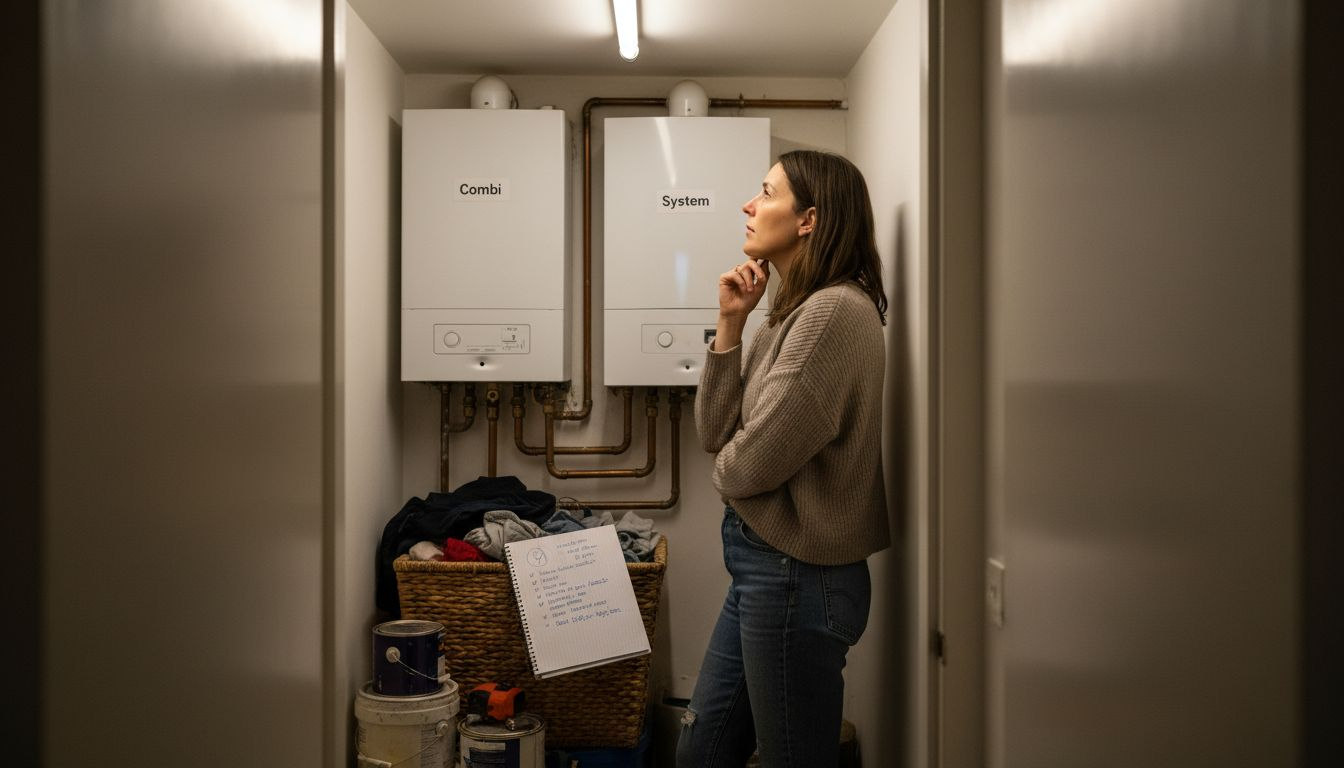
Here is a comparison of the main gas boiler types to help clarify their practical distinctions:
| Boiler Type | Space Requirements | Hot Water Supply | Best For |
|---|---|---|---|
| Combi Boiler | Very compact; no tanks | Instant, on-demand | Small homes or flats |
| System Boiler | Requires cylinder only | Consistent; supports multiple taps | Homes with several bathrooms |
| Regular Boiler | Needs cylinder and tank | Stored; supports high demand | Large or older properties |
Pro Tip: Professional consultation: Always consult a qualified heating engineer who can assess your specific property characteristics and recommend the most suitable gas boiler type for your unique needs.
Understanding the internal mechanics of gas boilers is crucial for homeowners seeking efficient heating solutions. Gas boiler technologies have evolved to provide sophisticated heating mechanisms that cater to diverse household requirements and spatial constraints.
Combi boilers represent the most compact heating system, operating with remarkable efficiency by heating water directly from the mains supply. Unlike other boiler types, they eliminate the need for separate water storage tanks, making them ideal for properties with limited space. When a hot water tap is activated, cold water passes through a heat exchanger, where it is instantly heated by the gas-powered burner, delivering hot water on demand. System boilers function differently, utilising a separate hot water cylinder to store heated water. This design allows for a more consistent hot water supply, particularly beneficial for homes with multiple bathrooms or higher simultaneous water usage requirements. The boiler heats water which is then stored in an insulated cylinder, ready for immediate use.
Regular boilers, the most traditional design, incorporate both a hot water cylinder and a cold water storage tank. Typically found in older properties, they rely on gravity-fed systems and are best suited to homes with existing complex plumbing infrastructures. These boilers heat water and store it in a cylinder, with a separate tank supplying cold water. While less efficient than modern alternatives, they remain compatible with older central heating systems and can provide reliable heating for properties with specific architectural constraints.
Pro Tip: Compatibility assessment: Before selecting a boiler type, conduct a thorough evaluation of your property’s existing plumbing infrastructure, hot water demands, and spatial limitations to ensure optimal performance and efficiency.
The economic and performance dynamics of gas boilers represent a critical consideration for homeowners seeking cost-effective heating solutions. Boiler lifespan and operational efficiency significantly impact long-term household expenses, making a comprehensive understanding essential for informed decision-making.
Typically, gas boilers maintain peak efficiency for approximately 10 to 15 years, with performance gradually declining over time. Combi boilers generally demonstrate the highest energy efficiency, converting up to 90% of fuel into usable heat, whereas regular boilers might operate at slightly lower efficiency levels. Running costs are primarily influenced by factors such as boiler type, insulation quality, maintenance frequency, and household hot water consumption patterns. System boilers often provide a balanced approach, offering consistent performance with moderate running expenses. Annual servicing becomes crucial in maintaining optimal efficiency, potentially extending the boiler’s operational lifespan and preventing unexpected performance degradation.
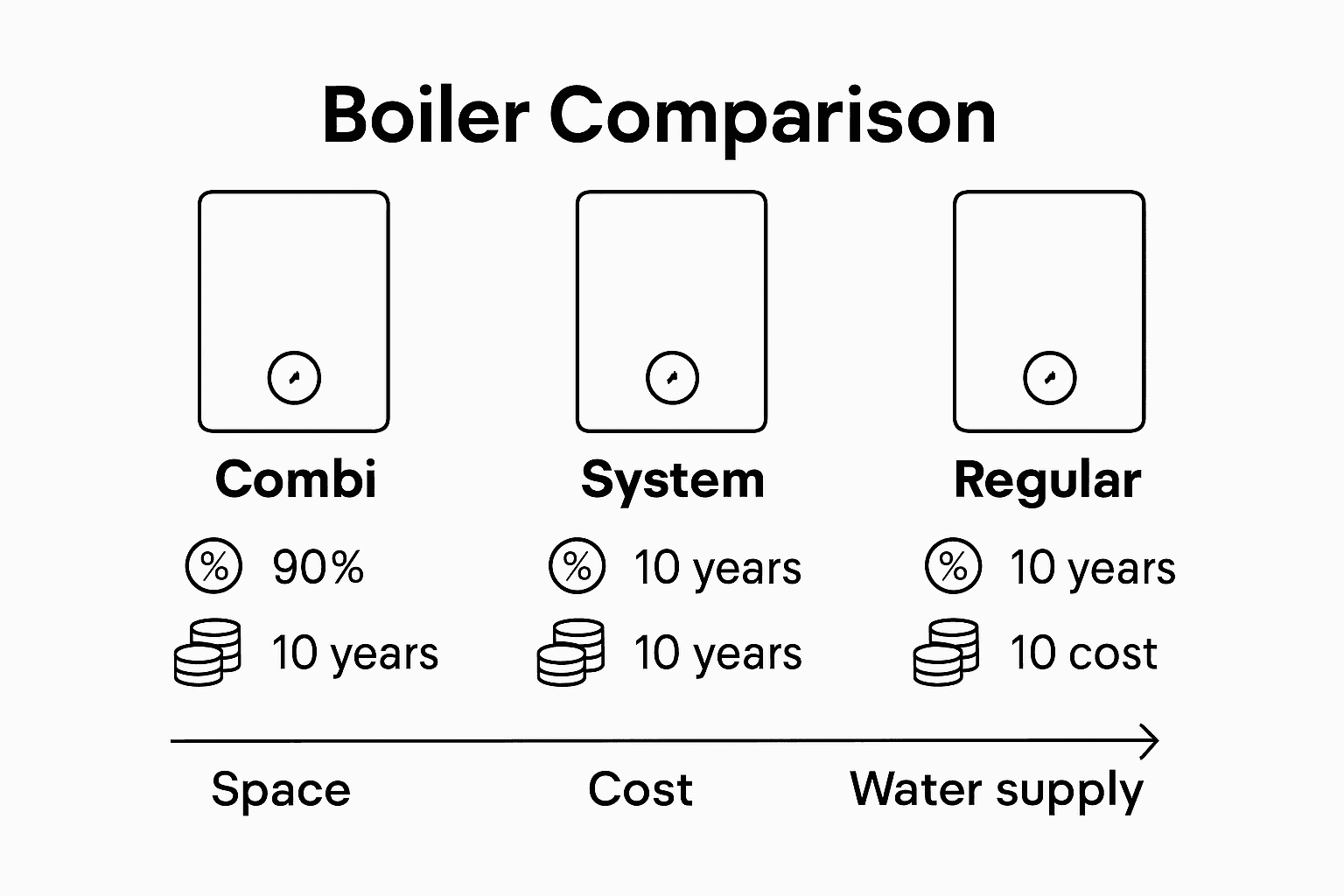
To better understand running costs and longevity, consider these typical performance aspects:
| Boiler Type | Typical Efficiency (%) | Average Lifespan (Years) | Installation Cost Level |
|---|---|---|---|
| Combi | 88–95 | 10–15 | Lower |
| System | 85–92 | 10–15 | Medium |
| Regular | 80–90 | 10–15 | Higher |
Comparing boiler types reveals nuanced cost implications. Combi boilers tend to have lower installation costs and minimal heat loss, making them economically attractive for smaller properties. Regular boilers, while potentially less efficient, might prove more cost-effective in larger homes with complex heating requirements. Modern condensing boiler technologies have further enhanced efficiency, with some models achieving over 95% fuel-to-heat conversion rates, ultimately reducing energy consumption and associated running costs.
Pro Tip: Efficiency tracking: Install a smart meter to monitor your boiler’s energy consumption and identify potential efficiency improvements, helping you make informed decisions about maintenance and potential replacement.
Selecting the most appropriate gas boiler is a critical decision that impacts your home’s comfort, energy efficiency, and long-term running costs. Understanding your property’s specific heating requirements is essential for making an informed choice, ensuring optimal performance and cost-effectiveness.
Property size and layout play pivotal roles in boiler selection. Smaller homes or flats with limited space and fewer occupants typically benefit from combi boilers, which provide compact, on-demand heating and hot water without requiring additional storage tanks. Larger properties with multiple bathrooms and higher simultaneous hot water demands are better served by system boilers, which offer consistent water pressure and can handle greater thermal loads. Regular boilers remain ideal for older properties with existing traditional heating infrastructures, particularly those with complex plumbing systems or specific architectural constraints.
Critical selection factors extend beyond property dimensions. Energy efficiency ratings, annual fuel consumption, installation costs, and compatibility with existing central heating systems are crucial considerations. Modern condensing boilers, which capture and reuse heat that would traditionally be lost, can improve overall energy efficiency by up to 10-15% compared to older models. Additionally, consider your household’s specific hot water usage patterns, insulation quality, and potential future renovations that might impact heating requirements.
Pro Tip: Professional assessment: Arrange a comprehensive heating survey with a certified engineer who can provide tailored recommendations based on a detailed evaluation of your property’s unique characteristics and heating needs.
Navigating the complex landscape of boiler installation and maintenance requires a comprehensive understanding of potential pitfalls and stringent safety protocols. Critical safety regulations are paramount in preventing potentially life-threatening hazards associated with improper gas boiler management.
Homeowners frequently encounter several common mistakes that can compromise both system efficiency and safety. Incorrect boiler sizing represents a significant error, where individuals select boilers that are either too large or too small for their property’s requirements. Oversized boilers waste energy and increase running costs, while undersized units struggle to meet heating demands. Another critical mistake involves neglecting regular professional servicing, which can lead to reduced performance, increased energy consumption, and potential safety risks such as carbon monoxide leaks. Attempting do-it-yourself installations or repairs without proper certification is strictly prohibited and can invalidate manufacturer warranties and insurance coverage.
Safety regulations mandate that all gas boiler installations and maintenance must be performed exclusively by Gas Safe registered engineers. These professionals undergo rigorous training to ensure compliance with current safety standards, including precise installation techniques, ventilation requirements, and comprehensive system checks. Key safety considerations include proper flue positioning, adequate ventilation, correct pressure settings, and thorough leak detection. Homeowners must maintain documentation of professional servicing, ensure annual safety inspections, and install carbon monoxide detectors as an additional precautionary measure.
Pro Tip: Safety verification: Always request and verify a Gas Safe engineer’s registration card before permitting any boiler installation or maintenance work, ensuring your property’s heating system remains safe and compliant.
Choosing the right gas boiler type can feel overwhelming with options like combi, system, and regular boilers each offering unique features and benefits. If you are struggling with deciding which boiler meets your home’s heating demands and space constraints, or if you want to avoid costly mistakes such as incorrect sizing or inefficient models, professional expertise is essential. Understanding terminology like heat exchangers, efficiency ratings, and installation requirements matters for long-term comfort and savings.
At SKAN Heating, we specialise in providing expert boiler installation, repair, and maintenance services tailored to the specific needs of Portsmouth and Waterlooville residents. Our Gas Safe registered engineers ensure your system is safely and efficiently optimised, avoiding common pitfalls like poor maintenance or inappropriate boiler choice. With over 18 years of experience and 24/7 emergency support, you can trust us to keep your heating reliable and cost-effective.

Ready to upgrade or maintain your gas boiler with confidence? Contact SKAN Heating today for a thorough assessment and personalised recommendations to suit your property’s unique heating needs. Visit our website or call now to secure professional guidance and peace of mind in Hampshire’s region.
Learn more about our trusted services for gas boilers and heating solutions at SKAN Heating. Your comfort is our priority.
The three primary types of gas boilers are combi boilers, system boilers, and regular (conventional) boilers. Each type has unique features suited to different household needs and configurations.
Combi boilers heat water directly from the mains supply, providing hot water on demand without the need for storage tanks. This makes them efficient and compact, ideal for smaller homes.
Key factors include your property’s size and layout, hot water demands, existing plumbing infrastructure, energy efficiency ratings, and installation costs to ensure optimal performance and cost-effectiveness.
It is recommended to schedule professional maintenance for your gas boiler every 12 months to ensure efficiency, prevent breakdowns, and maintain safety standards.


