
Have an emergency? Call us now on 07732 234231. Available 24/7 with a 30 minute response time.

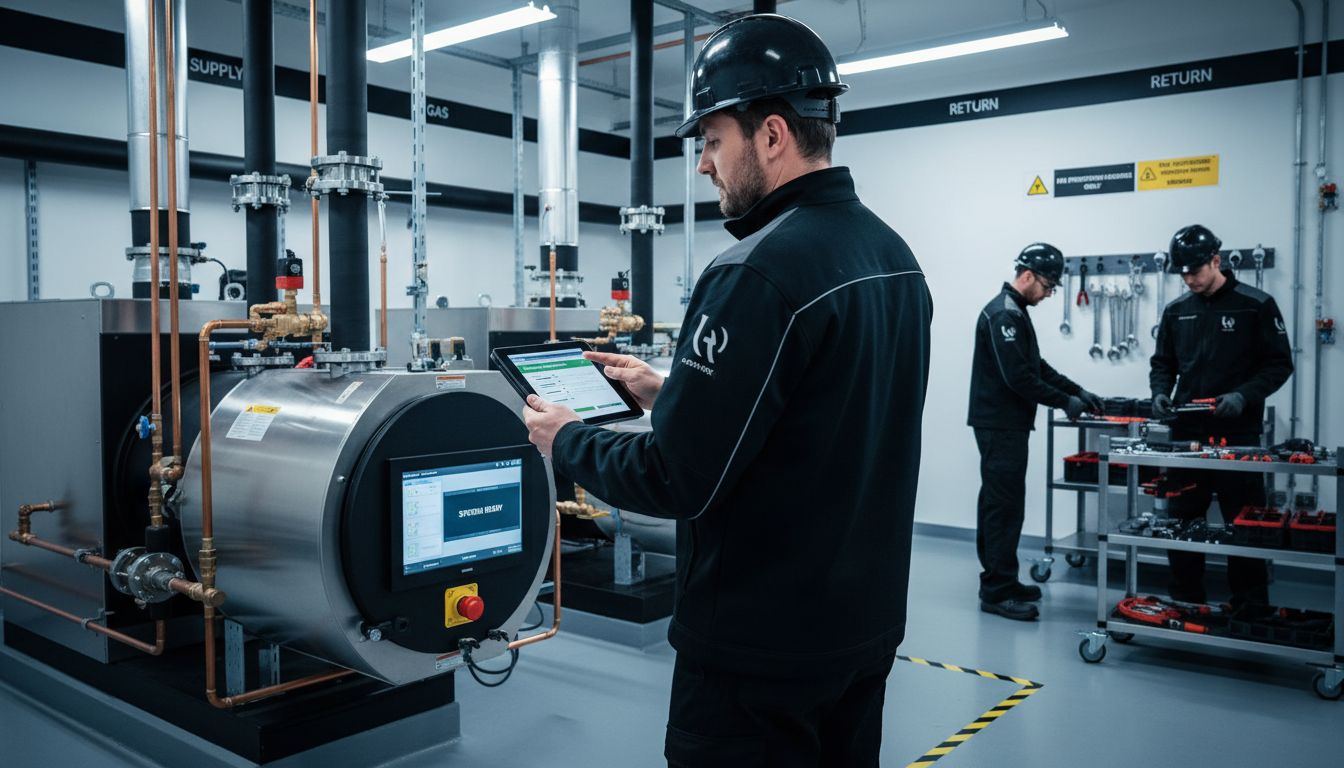
Did you know that a neglected commercial boiler can lose up to 30 percent of its efficiency over time? Regular maintenance does not just keep your system running smoothly, it directly impacts your energy costs and workplace safety. Understanding each step of commercial boiler servicing gives you confidence that your equipment will remain reliable and compliant, while also helping to prevent expensive breakdowns.
| Key Point | Explanation |
|---|---|
| 1. Prepare your work area thoroughly | Clear the workspace of hazards and gather tools for efficient service execution. |
| 2. Safely isolate the boiler | Disconnect power and close fuel valves to prevent accidents before inspection. |
| 3. Inspect all safety and operational components | Test systems like pressure relief valves to ensure safety mechanisms are functioning properly. |
| 4. Clean essential components carefully | Remove debris from burners and heat exchangers for optimal boiler performance. |
| 5. Document findings and verify performance | Record all service details and test results for future reference and monitoring system health. |
Before diving into a commercial boiler service, proper preparation sets the stage for a smooth and safe maintenance process. Your first task involves carefully preparing the work area and assembling all necessary equipment. As recommended by mcrgas, ensuring the workspace is clean and unobstructed is crucial for efficient work.
Start by clearing the area around the boiler completely. Remove any potential tripping hazards, excess materials or unnecessary equipment that might interfere with your service work. Caledonian Heating emphasizes the importance of creating a safe, well-lit environment before beginning any maintenance tasks. This means checking that you have adequate lighting and a clear path to move around the boiler system.
Gather your toolkit strategically. Typical tools for commercial boiler servicing include adjustable wrenches, screwdrivers, Allen keys, multimeter, pressure gauges, and cleaning brushes. Do not forget critical personal protective equipment such as safety glasses, work gloves, and non slip footwear. A well organized approach prevents interruptions and helps you complete the service efficiently and safely.
Quick pro tip: Always have a clean cloth or rag nearby for wiping down components and keeping your workspace tidy during the service process.
With your work area prepared, the next critical step in commercial boiler servicing involves safely isolating the system and conducting a meticulous visual inspection. Mcrgas emphasizes the paramount importance of safety by recommending complete isolation of the boiler from its power supply before beginning any inspection work.
Carefully switch off all electrical connections and close the gas or fuel supply valves. This prevents any unexpected activation during your service process. As Caledonian Heating suggests, perform a detailed visual examination to detect potential problems. Look systematically for signs of wear including corrosion, rust, water stains, unusual discolouration, or evidence of leaks around pipe connections, seals, and the boiler body itself.
Specifically inspect key areas such as the heat exchanger, burner assembly, flue connections, and pressure relief valves. Check for any physical damage like cracks, warping, or component degradation. Pay close attention to seals and gaskets which can become brittle or compressed over time. A comprehensive visual inspection helps you identify potential issues before they escalate into more serious mechanical failures.
Warning: Never attempt to restart or reconnect power if you discover significant damage. Instead, consult a professional heating engineer for a comprehensive assessment. Learn more about our comprehensive boiler maintenance guide for additional insights into professional servicing techniques.
After conducting your initial visual inspection, the next crucial stage involves thoroughly testing the boiler’s safety controls and operational components. Mcrgas highlights the critical importance of verifying that all safety mechanisms are functioning correctly before proceeding with further servicing.
Begin by systematically checking key safety components. This includes carefully examining pressure relief valves, which are designed to prevent dangerous pressure buildups. Test the thermostat’s responsiveness by adjusting settings and confirming it triggers boiler operations as expected. Caledonian Heating recommends a comprehensive approach to ensuring each operational component performs its intended function without anomalies.
Pay special attention to critical safety devices such as flame sensors, temperature limiters, and gas valve controls. Use a multimeter to verify electrical continuity and check that each component responds precisely within its specified parameters.
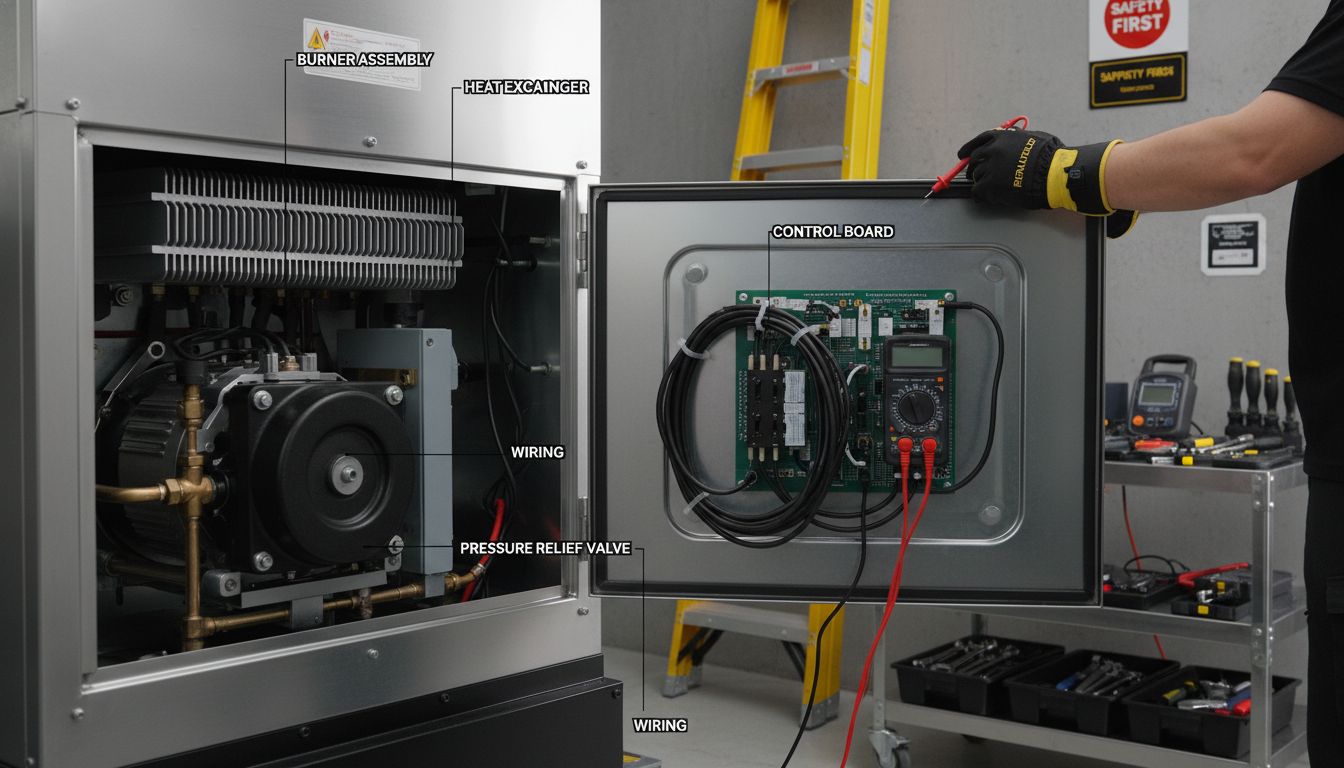 Some tests may require simulating specific conditions to confirm full operational integrity. Look for any signs of electrical wear, loose connections, or potential failure points that could compromise system safety.
Warning: If you detect any malfunction or uncertainty during component testing, immediately cease the service process. Professional intervention becomes necessary to prevent potential safety risks. Learn more about professional boiler maintenance techniques to understand the complexities of comprehensive boiler servicing.
With safety controls tested, the next essential step in commercial boiler servicing involves thoroughly cleaning key components and removing accumulated debris. Mcrgas emphasizes the importance of meticulously cleaning critical areas like burners, heat exchangers, and flue systems to maintain optimal performance.
Begin with the burner assembly, which is particularly prone to debris accumulation. Carefully remove the burner and use specialized brushes and compressed air to eliminate dust, soot, and carbon deposits. Caledonian Heating recommends a systematic approach to cleaning that prevents potential efficiency losses. Pay special attention to the heat exchanger surfaces, using gentle brushing techniques to remove scale and sediment without causing damage to delicate components.
Move on to cleaning the flue passages and internal chambers. Use a combination of soft brushes, vacuum attachments, and cleaning solutions specifically designed for boiler systems. Inspect each cleaned component for signs of wear or damage that might have been hidden beneath accumulated debris. Ensure all cleaning materials and residues are completely removed before reassembling the components.
Warning: Always use manufacturer recommended cleaning solutions and tools. Inappropriate cleaning methods can cause significant damage to sensitive boiler components. Learn more about professional boiler maintenance techniques to understand the nuanced approach to thorough boiler servicing.
With cleaning and maintenance complete, the final stage of commercial boiler servicing involves a comprehensive performance verification and detailed documentation. Mcrgas emphasizes the critical importance of conducting thorough operational tests and recording all findings for future reference.
Reconnect the boiler to power and systematically test its operational parameters. Monitor key performance indicators such as combustion efficiency, gas pressure, temperature stability, and overall system response. Caledonian Heating recommends a methodical approach to verifying that each component functions precisely as intended. Run the system through multiple operational cycles, checking for consistent performance and listening for any unusual sounds or detecting unexpected temperature variations.
Prepare a comprehensive service report documenting every aspect of the maintenance process. Include detailed notes on components inspected, cleaning procedures performed, test results, and any potential areas of future concern. Photograph key components and record specific measurements like gas pressures, temperature readings, and electrical continuity values. This documentation serves as a crucial reference for future maintenance and helps track the boiler system’s long term performance and potential wear patterns.
Warning: If any performance anomalies are detected during final testing, do not consider the service complete. Consult a professional heating engineer to address any unexpected issues. Learn more about professional boiler maintenance techniques to understand comprehensive diagnostic approaches.
Commercial boiler servicing involves detailed steps to keep your heating system safe, efficient, and long-lasting. From isolating the boiler to testing safety controls and thorough cleaning, each stage addresses common risks like component wear, unnoticed leaks, and performance drops. If you want to avoid unexpected breakdowns that disrupt your business or cause costly repairs, regular professional servicing is essential.
Do not leave your comfort and safety to chance. With over 18 years of trusted experience, our certified technicians in Hampshire understand the complexities of commercial boiler maintenance. We offer tailored solutions for Portsmouth and Waterlooville businesses who need reliable heating and swift emergency support. Discover how we bring peace of mind through precise diagnostics, effective repairs, and expert servicing at Skan Heating.

Ready to keep your commercial boiler running smoothly and safely? Contact us today for a professional service that goes beyond the basic checklist. Visit our homepage to book your appointment. Learn more about expert boiler maintenance techniques and secure heating performance you can trust.
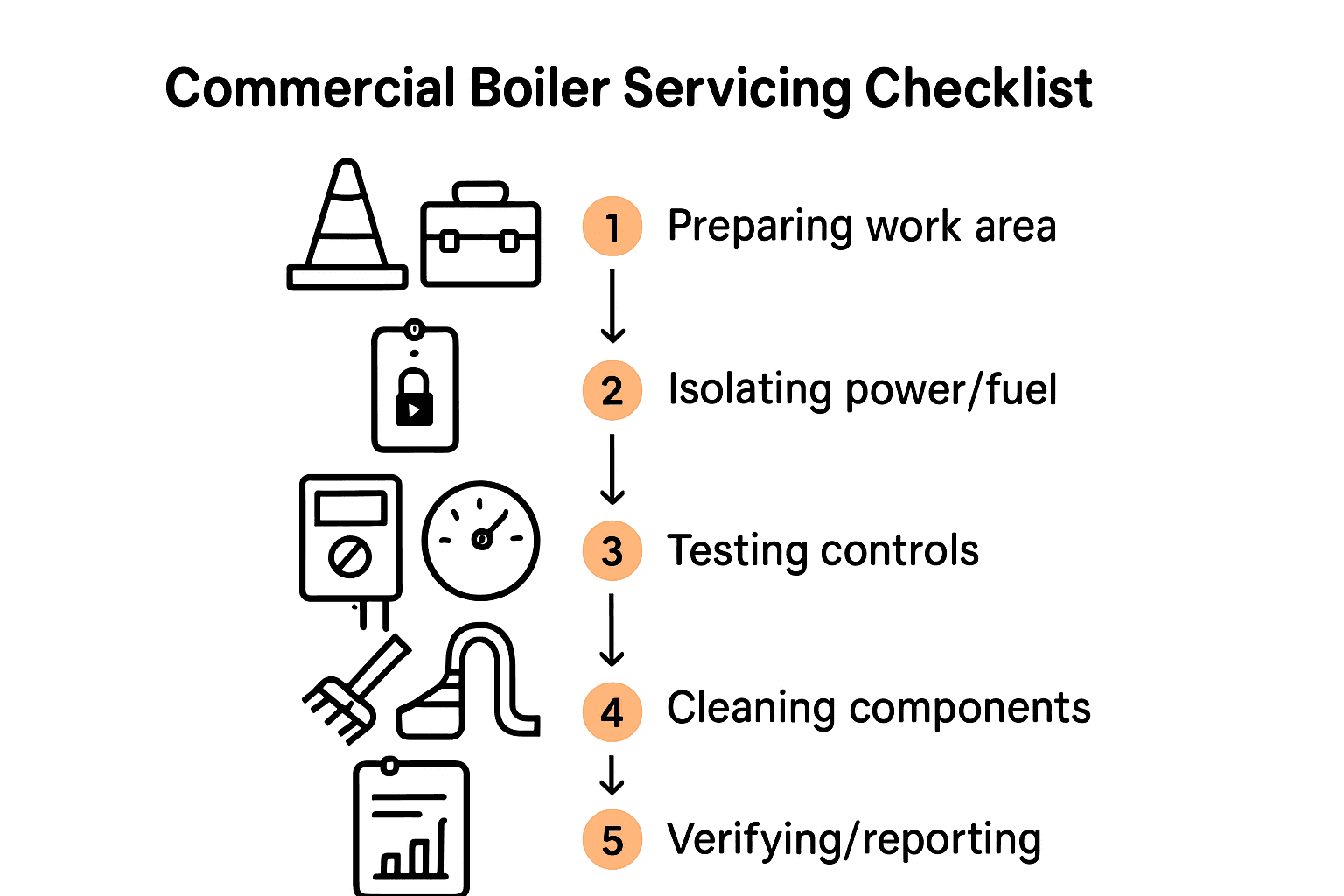
A comprehensive commercial boiler servicing checklist typically includes steps like preparing the work area, isolating the boiler, inspecting for visible issues, testing safety controls, cleaning key components, and verifying system performance. Follow each step methodically to ensure thorough maintenance and reliable heating.
Commercial boiler servicing should be conducted at least once a year to maintain optimal performance and safety. Schedule this service early to avoid peak periods, ensuring your boiler operates efficiently throughout the heating season.
Common signs that your commercial boiler needs servicing include unusual noises, fluctuating temperatures, pilot light issues, or visible leaks. Address these warning signs promptly to prevent costly breakdowns or safety hazards.
To prepare your work area for boiler servicing, clear any potential hazards, ensure adequate lighting, and gather all necessary tools. Create a safe and easy-to-navigate space to facilitate efficient service and minimize interruptions.
If you discover a significant issue during the inspection, such as visible damage or leaks, cease all servicing immediately. Consult a qualified professional heating engineer to assess the problem and recommend necessary repairs or actions.
Documenting findings during boiler servicing is crucial for tracking the unit’s performance over time and identifying potential issues early. Create a detailed service report including inspection notes and measurement readings to guide future maintenance efforts.


