
Have an emergency? Call us now on 07732 234231. Available 24/7 with a 30 minute response time.

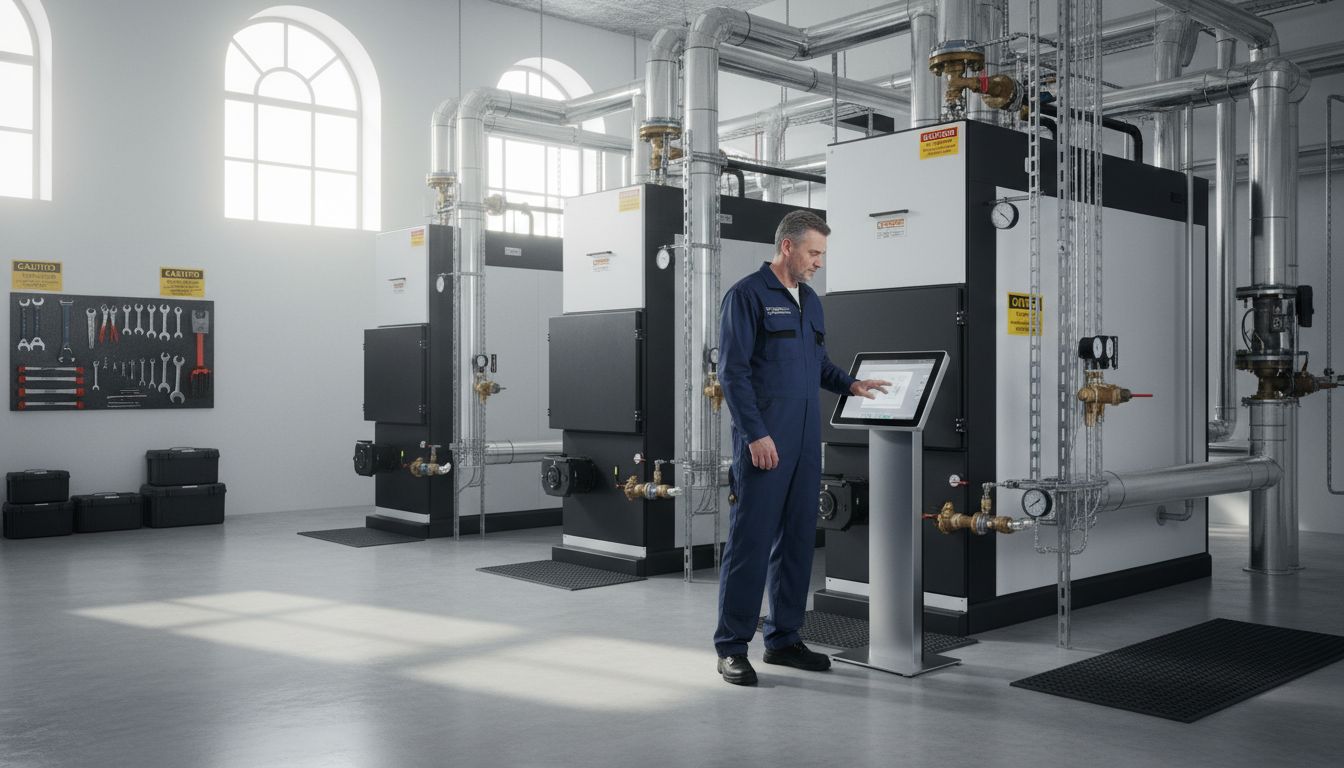
A single boiler breakdown can shut down a business for days and lead to losses that stretch well into the thousands. When you consider that regular boiler maintenance can reduce unexpected failures by over 50 percent, it is clear why taking care of these systems is crucial. Proper upkeep keeps workplace heating safe and reliable, saves money on repairs, and even helps businesses meet strict legal standards without last-minute panic.
| Point | Details |
|---|---|
| Importance of Regular Maintenance | Annual servicing by certified technicians is essential to ensure safety, efficiency, and compliance with regulations. |
| Diverse Boiler Types | Selecting the right boiler type (hot water, biomass, steam) is crucial based on specific business heating needs and sustainability goals. |
| Legal Compliance | Compliance with UK regulations, including safety inspections and maintenance records, is necessary to avoid penalties and ensure operational safety. |
| Risks of Neglecting Maintenance | Failure to conduct regular inspections can lead to increased operational costs, safety hazards, and unexpected equipment failures. |
Commercial boiler maintenance is a systematic and professional approach to preserving and optimising the performance, safety, and longevity of heating systems used in business environments. According to the Health and Safety Executive, this process involves regular inspections and servicing to ensure safe operation, prevent unexpected breakdowns, and comply with critical legal requirements.
At its core, commercial boiler maintenance encompasses a comprehensive series of technical assessments and preventative actions. Energy Saving Trust highlights that this typically involves an annual check conducted by a qualified engineer who meticulously examines the boiler’s operational status. The primary objectives include:
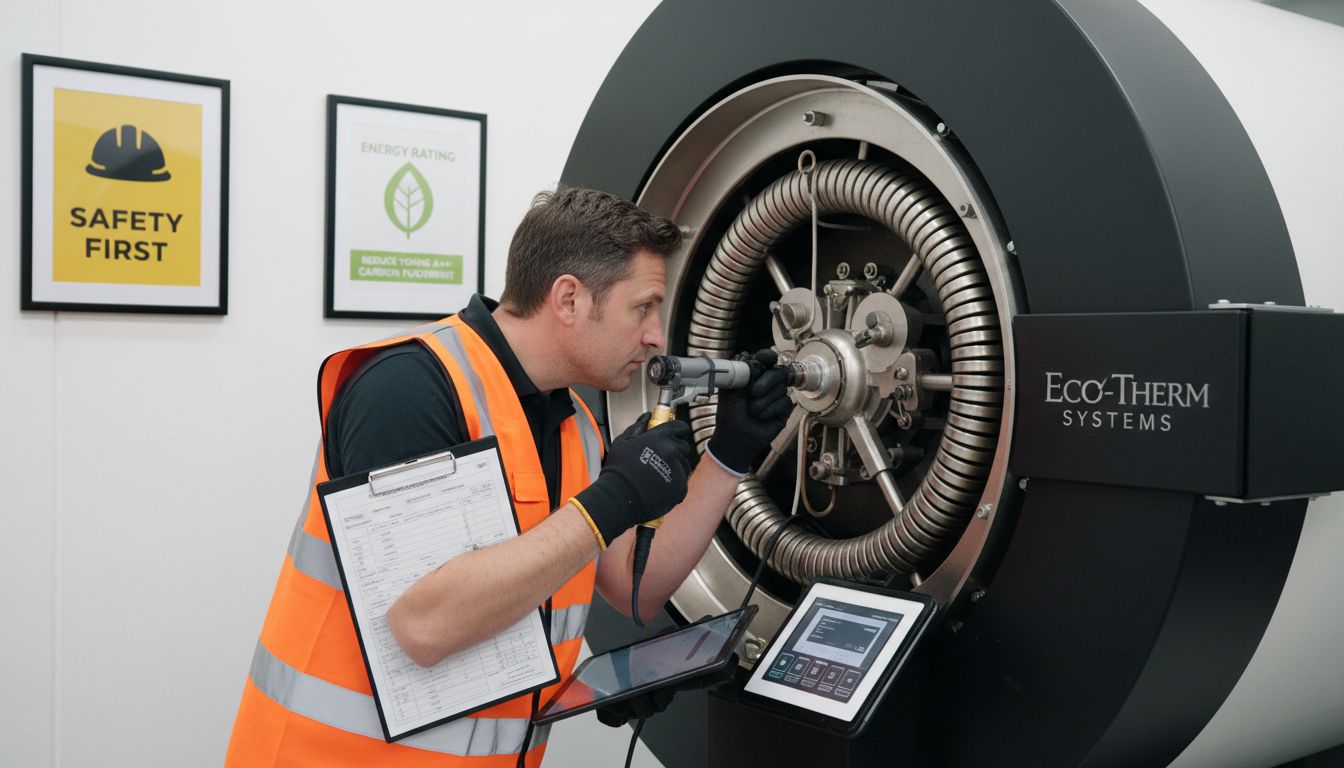
Professional maintenance goes beyond simple repairs. It represents a strategic investment in your commercial infrastructure, helping businesses avoid costly emergency interventions, reduce energy consumption, and maintain a reliable heating system. When performed by certified technicians, these service checks can extend equipment lifespan, minimise unexpected downtime, and provide peace of mind that your heating system meets all necessary safety standards. Understanding Boiler Service: What Do They Do? provides further insights into the comprehensive nature of professional boiler maintenance.
Commercial boilers represent a diverse range of heating systems designed to meet the complex heating requirements of businesses across various industries. Energy Technology Laboratory identifies three primary categories of commercial boilers: hot water boilers, biomass boilers, and steam boilers, each engineered for specific operational needs and heating applications.
Hot water boilers are versatile systems primarily used for space heating and providing domestic hot water in commercial settings. Biomass boilers offer an environmentally conscious alternative, utilising organic materials as fuel, which can significantly reduce carbon footprints for businesses committed to sustainable practices. Steam boilers play a crucial role in industrial processes, generating high-temperature steam for manufacturing, heating, and complex mechanical operations.
Additionally, DIY Doctor highlights other important commercial boiler variants that businesses might consider:
When selecting a commercial boiler system, businesses must carefully evaluate their specific heating requirements, energy consumption patterns, environmental considerations, and budgetary constraints. Commercial Heating Solutions List for Businesses can provide further guidance on matching the right boiler system to your specific commercial needs. Each boiler type offers unique advantages, and the optimal choice depends on factors such as building size, industry sector, energy costs, and sustainability goals.
Here’s a comparison of the main types of commercial boilers and their key characteristics:
| Boiler Type | Typical Application | Fuel Source | Main Advantage |
|---|---|---|---|
| Hot Water Boiler | Space heating Hot water | Gas Electric | Versatile Simple operation |
| Biomass Boiler | Heating Sustainable | Wood pellets Biomass | Eco-friendly Reduces carbon footprint |
| Steam Boiler | Industrial processes | Gas Oil Electric | High output Process steam |
| Condensing Boiler | Energy efficiency focus | Gas | Low energy costs |
| Oil-Fired Boiler | Sites off gas grid | Oil | Flexible installation |
| Solid Fuel Boiler | Traditional settings | Coal Wood | Uses local fuel sources |
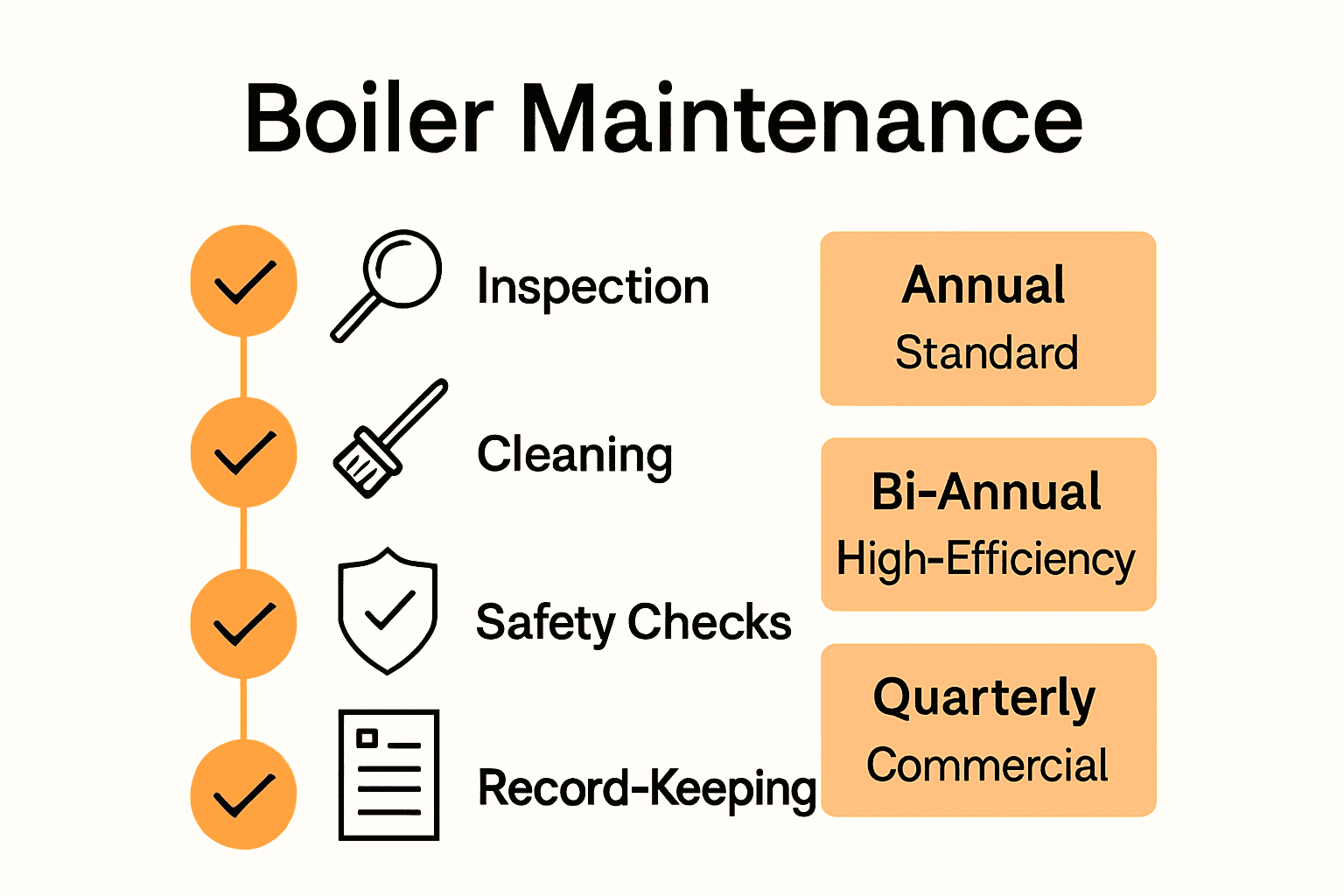
Commercial boiler maintenance is a critical process that ensures the safety, efficiency, and longevity of heating systems in business environments. Energy Saving Trust recommends an annual service as the cornerstone of comprehensive boiler care, highlighting a range of essential maintenance tasks that protect your investment and prevent potential operational disruptions.
The maintenance process encompasses several key technical interventions. According to the Health and Safety Executive, regular maintenance should systematically address safety devices, control systems, and the overall mechanical condition of the boiler. These critical tasks typically include:
Establishing a structured maintenance schedule is crucial for businesses. While annual servicing is the minimum recommended standard, some complex commercial systems might require more frequent interventions. Essential Boiler Maintenance Checklist can provide additional guidance on developing a tailored maintenance strategy. The frequency of maintenance depends on factors such as boiler type, age, usage intensity, manufacturer recommendations, and specific industry regulations. Proactive businesses often implement quarterly or bi-annual comprehensive checks to ensure optimal system performance and prevent unexpected breakdowns.
Commercial boiler operations in the United Kingdom are subject to a comprehensive framework of legal regulations designed to ensure safety, environmental protection, and operational standards. Health and Safety Executive mandates strict compliance with the Pressure Systems Safety Regulations 2000, which establishes critical requirements for boiler inspection, maintenance, and overall operational safety.
Key legal obligations for commercial boiler operators encompass multiple regulatory dimensions. UK Government guidelines highlight that businesses must navigate complex requirements related to environmental emissions, safety certifications, and operational permits. These requirements typically involve:
Non-compliance can result in significant financial penalties, potential legal action, and operational disruptions. Businesses must work closely with certified engineers and regulatory consultants to develop robust compliance strategies. The legal landscape requires ongoing vigilance, with regulations periodically updating to reflect technological advancements and environmental considerations. Essential Boiler Maintenance Checklist can provide additional guidance on navigating these complex regulatory requirements and maintaining full legal compliance in commercial boiler operations.
Commercial boiler maintenance involves navigating a complex landscape of potential risks and financial implications that can significantly impact business operations. Energy Saving Trust warns that neglecting regular servicing can lead to substantial long-term consequences, including escalating energy bills, reduced system efficiency, and unexpected safety hazards.
The Health and Safety Executive identifies several critical risks that businesses must proactively manage, highlighting the potential for catastrophic operational failures. These risks include:
Financial implications of poor maintenance can be devastating. A single unaddressed mechanical issue can result in repair costs ranging from hundreds to thousands of pounds, far exceeding the relatively modest expense of routine professional servicing. Businesses frequently underestimate the cumulative impact of seemingly minor maintenance oversights. Typical mistakes include delaying annual inspections, ignoring minor performance fluctuations, and failing to maintain comprehensive service records. Essential Boiler Maintenance Checklist offers strategic insights into avoiding these common pitfalls and protecting your commercial heating investment.
Maintaining commercial boilers demands careful attention to safety, efficiency, and legal compliance as detailed in the Complete Guide to Commercial Boiler Maintenance UK. Many businesses struggle with scheduling regular inspections, managing potential risks like carbon monoxide leaks, and navigating complex UK regulations. You should not risk costly breakdowns or compromised workplace safety by leaving maintenance to chance. Trust professional, certified technicians who understand these challenges and can keep your heating systems running smoothly.
Choose Skan Heating for reliable commercial boiler servicing backed by over 18 years of experience in Portsmouth, Waterlooville, and Hampshire. Our comprehensive maintenance solutions ensure your system meets legal standards and operates at peak efficiency. Don’t wait for an emergency; act now to protect your business from unexpected failures and rising energy costs. Visit our official website to schedule a service or learn about our commercial heating solutions. Your peace of mind starts with expert care tailored specifically for your business needs.
Commercial boiler maintenance is the systematic process of preserving and optimizing heating systems in business environments, involving regular inspections and servicing for safety, efficiency, and compliance with legal requirements.
It is generally recommended that commercial boilers undergo servicing at least once a year. However, some complex systems may require more frequent checks, such as quarterly or bi-annual inspections, depending on usage intensity and manufacturer recommendations.
Essential maintenance tasks for commercial boilers include comprehensive visual inspections, checking and calibrating safety controls, cleaning filters, examining heat exchangers, verifying electrical connections, testing combustion efficiency, and inspecting flue systems and ventilation.
Neglecting maintenance can lead to serious risks such as boiler explosions, carbon monoxide leaks, sudden system breakdowns, compromised workplace safety, increased energy consumption, and accelerated equipment degradation.


